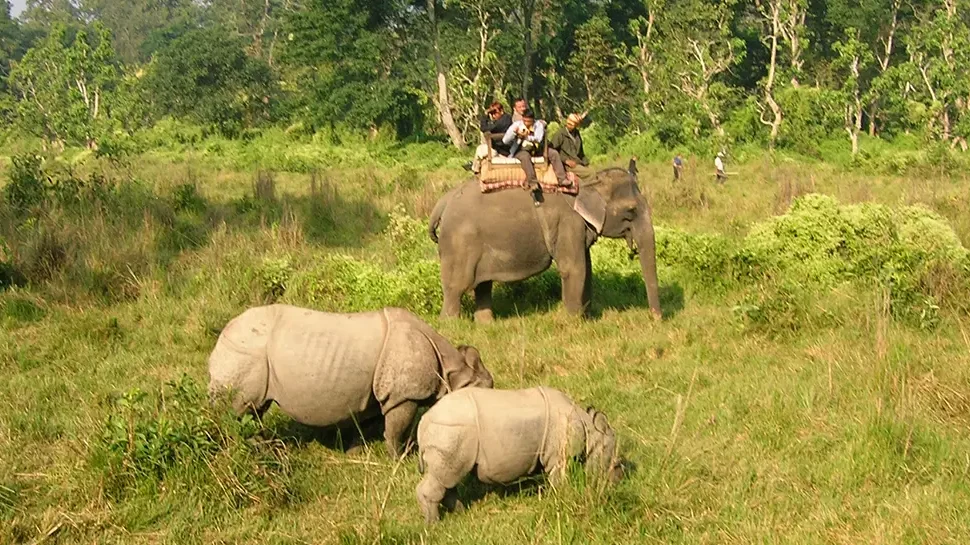
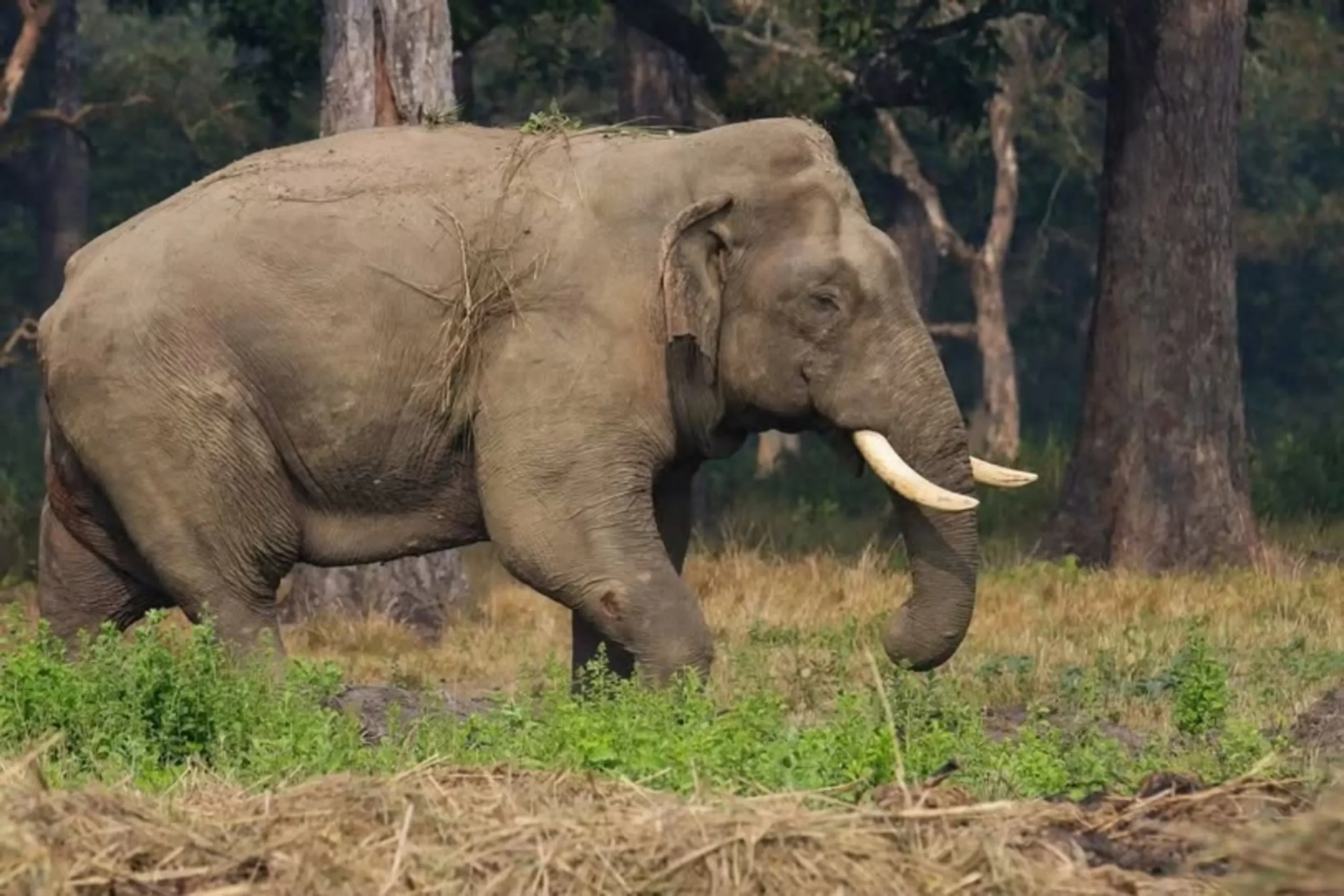
Imagine you are in Nepal and you hear locals talking about Ronaldo. You might think they’re talking about the footballer Ronaldo. Instead, they’re talking about the celebrity elephant of Chitwan Sauraha.
Ronaldo, the celebrity elephant, was named after the Brazilian football star, Ronaldo Nazário. The elephant appeared in Sauraha during the 2002 World Cup. Since Ronaldo Nazário was a standout player for Brazil in the 2002 World Cup, the locals named the elephant after him.
Ronaldo Nazário won the Golden Boot and helped Brazil win the World Cup. The locals named the elephant Ronaldo because his agility and movement were comparable to those of the football star.
Ronaldo regularly roamed around Sauraha and the Khorsor Breeding Centre. He was a wild bull elephant and was an important breeding partner for female elephants in the Khorsor Breeding Centre.
He was a father to 38 calves and greatly contributed to the elephant breeding center. He recently died aged 53 in September 2026, leaving behind a remarkable legacy.
How did Ronaldo get his name?
Ronaldo, the elephant, first appeared in Sauraha in 2002, when the World Cup was going on. Ronaldo Nazario of Brazil was the standout player of the tournament.
Brazil won the tournament, and Ronaldo scored 8 goals, winning him the Golden Boot. Since the elephant first appeared around Sauraha during that time period, it was named after the Brazilian superstar.
The locals started calling him Ronaldo because they believed the agility and movement of the elephant was similar to the Brazilian striker. His regular appearances in and around the park made the name stick for more than two decades.
Some sources also say the elephant was named Ronaldo because he kicked people like a football. However, there is no backing of evidence for this claim.
The name didn’t come from an official naming campaign; the name just stuck because locals called him Ronaldo for years.
Was Chitwan’s Ronaldo named after Cristiano Ronaldo?
The famous Chitwan elephant was named after the Brazilian striker, Ronaldo Nazário, not Cristiano Ronaldo. Cristiano Ronaldo and the Brazilian Ronaldo are different players from different generations.
Ronaldo Nazário, the Brazilian striker, is also known as R9 or O Fenômeno. This was around the same time when the elephant started appearing around Sauraha. Cristiano Ronaldo, also known as CR7, is a remarkable footballer, but from a different generation.
Why Was Ronaldo the Elephant So Well Known in Sauraha, Chitwan?
Ronaldo the elephant became famous because of his frequent presence and easily recognizable appearance. Some people admire him while some don’t due to his involvement in human-elephant conflicts.
Some factors that contribute to Ronaldo being well-known are:
- Ronaldo was easy to recognize from a distance, as he had lost his tail during a fight with another elephant.
- Tourists frequently saw and photographed him in the Sauraha and Khorsor area.
- He visited the Khorsor Breeding Center regularly for breeding.
- He fathered 38 calves and played a giant role in Chitwan’s elephant breeding program.
- He was also involved in numerous human-elephant conflicts, harming many people.
Ronaldo’s Role in Chitwan’s Elephant Breeding Program
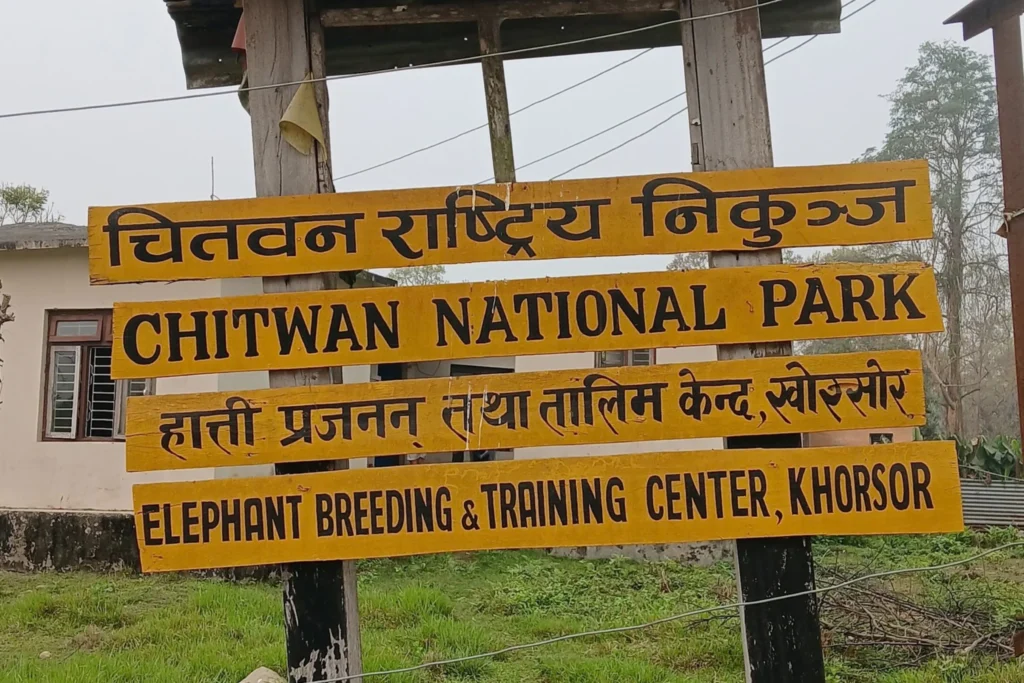
Ronaldo’s role at Chitwan National Park is more than just his name and fame. Ronaldo was the father of 38 of the 69 calves born in the elephant breeding center.
Ronaldo is a wild elephant, and breeding captive females with a free-ranging wild bull elephant can help increase genetic diversity and support a long-term breeding program.
Ronaldo’s Life in Chitwan
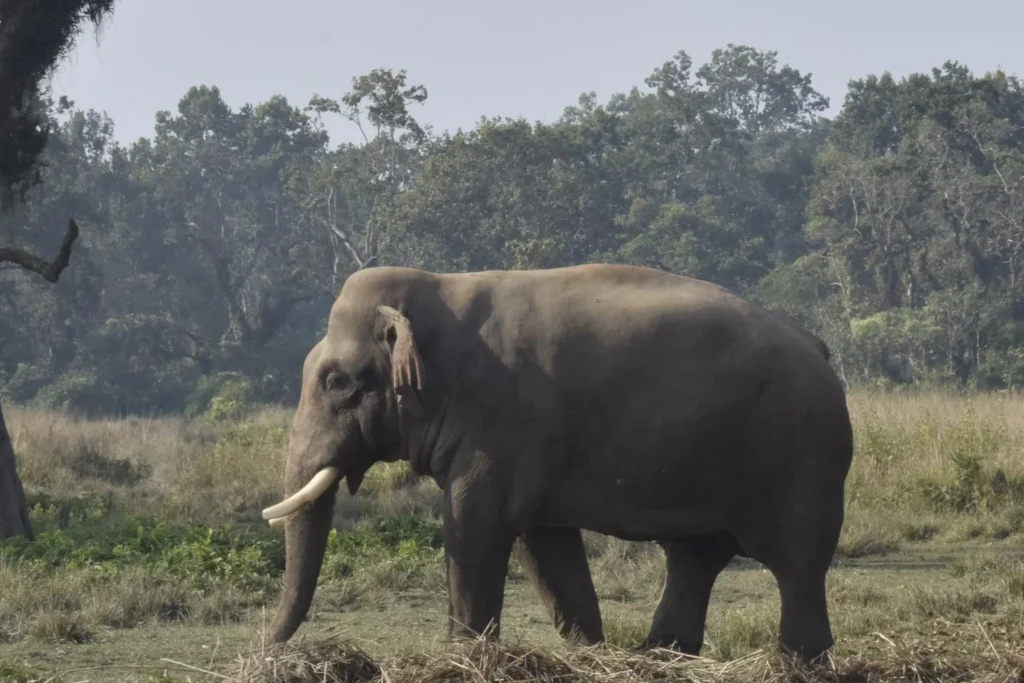
Ronaldo roamed several areas in Chitwan:
- Sauraha, which is the primary gateway to Chitwan National Park
- Khorsor Elephant Breeding and Training Centre
- Forests and grasslands in the Chitwan National Park.
- Chitwan National Park buffer zones.
- He used these routes to find food and other elephants.
Ronaldo also competed with other elephants for territorial dominance and for access to female elephants. Some notable rival male elephants that Ronaldo had were Bhimgaj and Dhrube.
Ronaldo appeared calm around people, but wild animals have very unpredictable behavior. Kantipur has reported multiple human-elephant conflicts, with at least 15 human deaths linked to him.
Understanding the fact that wild elephants are dangerous is crucial. Wild animals can appear calm most of the time, but when they sense danger, they can behave very unpredictably.
The Tragic Death of Ronaldo
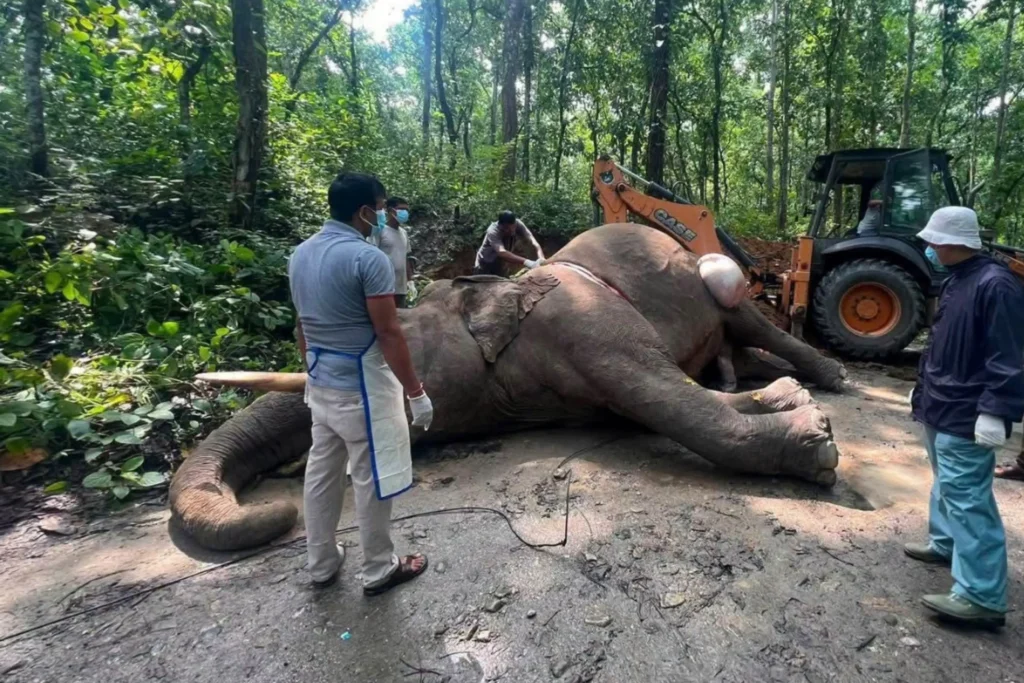
Ronaldo, the famous bull elephant from Chitwan, was found dead on September 19, 2026. Ronaldo was found near the Bishahajari post in the Chitwan National Park buffer zone. He was cremated following the religious rites and rituals.
Reports noted burn injuries around Ronaldo’s mouth, and the cause of death was identified as electrocution. According to reports, Ronaldo pulled an electrical wire while feeding.
Dominant male elephants like Ronaldo are very important for conserving the genetic health of
elephants.
With Ronaldo’s death, the Khorsor breeding center will have to seek replacements, which takes time, as new dominant males need to settle in the area and start producing calves at a similar rate.
Ronaldo’s death shows that more effort has to be put into wildlife conservation in Nepal by building power lines, roads, and other facilities that are animal-friendly. Such incidents should be looked into by the National Park authorities to prevent similar deaths.
Ronaldo’s Legacy in Chitwan National Park
Ronaldo is no longer with us, but his contributions to the Chitwan National Park will forever be remembered. Ronaldo’s legacy can be broken down into several dimensions:
- He left behind a memorable name for the locals, guides, and tourists in Chitwan. Named after the Brazilian striker, the elephant’s name will be remembered by people in Chitwan.
- He was a recognizable elephant among guides, tourists, and locals, as he was frequently seen in the Sauraha and Khosor area. The people will definitely miss his presence.
- His contribution to the Khorsor elephant breeding center is remarkable, as he fathered 38 calves and contributed to expanding the genetic diversity of elephants.
Why Are Elephants Named After Celebrities in Nepal?
Elephants don’t have an official naming convention in Nepal. Elephants are named after famous personalities, places, or events. The reason might be that they are easy to remember, and they connect wildlife to popular culture.
A recognizable name also helps the locals and visitors to recognize individual elephants. Famous names can also help people discuss the behavior of individual elephants with ease.
The reason for giving elephants celebrity names might also be related to their movement and behavior, as in the case of Ronaldo, whose agility is comparable to that of the Brazilian striker.
The origin of each elephant’s name can be different. Below are some elephants named after famous people and the origin of their names:
Leonardo
According to reports, Leonardo, the elephant, was named after the Hollywood actor and environmental advocate Leonardo DiCaprio after he visited Bardiya National Park as part of the Save Tigers Now Campaign in 2010. The elephant might have been named after Leonardo DiCaprio to honor his wildlife conservation efforts in Nepal.
Harry
As reported by The Kathmandu Post, Prince Harry visited Bardiya National Park in 2016 during his five-day tour to Nepal. He also learned about tiger conservation and took part in activities like rafting and a jungle walk. Reports say that the elephant was named after Prince Harry to honor him following his visit to Bardiya National Park in 2016.
Frequently Asked Questions
- Why was the elephant in Chitwan named Ronaldo?
- The elephant in Chitwan was named Ronaldo because he first appeared in Sauraha when the 2002 FIFA World Cup was going on, and the Brazilian Striker Ronaldo was popular.
- Was Chitwan’s Ronaldo named after Cristiano Ronaldo?
- No, the elephant was named after the Brazilian Ronaldo Nazário, not Cristiano Ronaldo.
- Was Ronaldo a wild elephant or a domesticated elephant?
- Ronaldo was a wild elephant.
- What was the cause of Ronaldo’s death?
- Ronaldo died due to electrocution after he came into contact with an electrical wire while feeding.
- How did Ronaldo lose his tail?
- Ronaldo lost his tail during a fight with another elephant.
- How old was Ronaldo when he died?
- Ronaldo was 53 years old when he died in September 2026.
- Where did Ronaldo die?
- Ronaldo’s body was found in the Chitwan National Park buffer zone near the Bishazari post in the Kumal Tal area.