Introduction
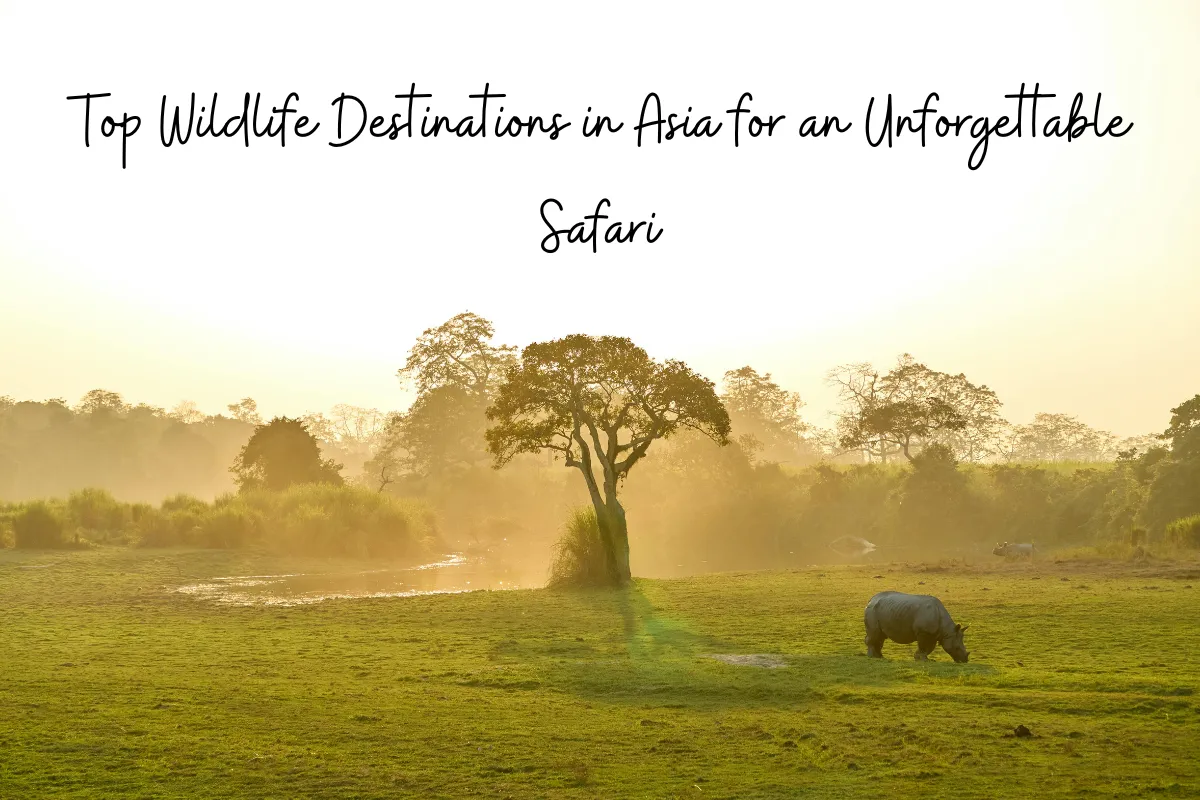
Asia offers a wide variety of wildlife habitats, from open grasslands and dense rainforests to wetlands, rivers, high mountains, and tropical islands. These diverse ecosystems support fascinating animals, including the greater one-horned rhinoceros, Bengal tiger, snow leopard, orangutan, and Komodo dragon.
For nature lovers, the continent offers opportunities to explore wildlife in some of the world’s most distinctive natural environments.
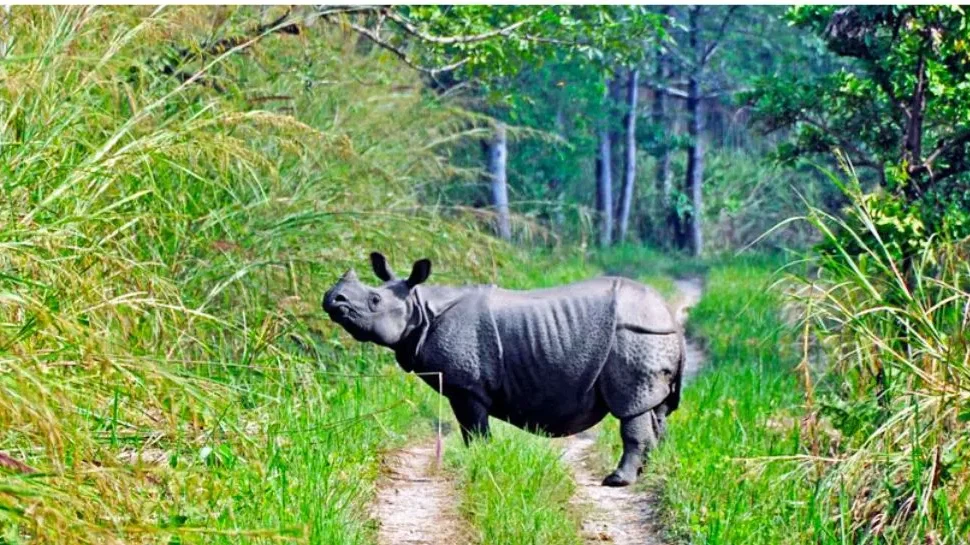
Each place offers a different wildlife experience. Nepal’s Chitwan National Park is known for its rich flora and fauna, greater one-horned rhinoceroses, and abundant birdlife. Popular activities include jeep safaris, canoe rides, and guided jungle walks.
In India, Kaziranga National Park in Assam is renowned for its greater one-horned rhinoceros population. Its grasslands, wetlands, and floodplains also support Bengal tigers, Asian elephants, wild water buffalo, swamp deer, and a wide variety of birds.
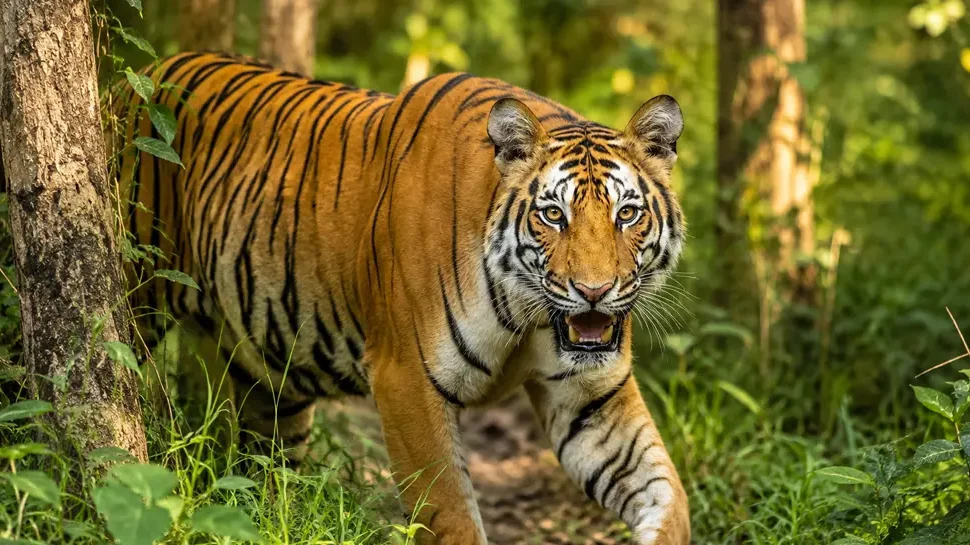
Bandhavgarh National Park in Madhya Pradesh is a popular destination for tiger safaris. In Sri Lanka, Yala National Park is known for leopard viewing, alongside elephants, sloth bears, and other wildlife.
Wildlife adventures extend beyond traditional jeep safaris. In Malaysian Borneo, boat trips along the Kinabatangan River offer opportunities to observe orangutans, proboscis monkeys, and other rainforest wildlife. The river is the second longest in Malaysia.
In Indonesia, Gunung Leuser National Park forms part of the Tropical Rainforest Heritage of Sumatra, a UNESCO World Heritage property. Thailand’s Khao Yai National Park, the country’s first national park, offers forest walks, birdwatching, and opportunities to spot elephants.
In Ladakh, India, Hemis National Park offers opportunities to search for snow leopards during guided winter expeditions.
The best spot depends on the animals you want to see, your preferred activities, travel time, and the season. Some places suit first-time safari travelers and families, while others require greater physical preparation, specialist guides, or travel to remote areas.
By reading this guide, you can explore the best wildlife destinations in Asia for a safari. It helps you to choose a wildlife experience that matches your interests and travel plans. These destinations lie in Nepal, India, Sri Lanka, Malaysia, Indonesia, and Thailand.
Best Wildlife Destinations in Asia for Safari at a Glance
| Destination | Country | Best for | Main activities |
| Chitwan National Park | Nepal | Greater one-horned rhinoceroses, Bengal tigers, and rich birdlife | Jeep safaris, canoe rides, guided walks in the jungle, bird-watching |
| Kaziranga National Park | India | Greater one-horned rhinoceroses, wild water buffalo, and Asian elephants | Grassland jeep safaris, wildlife photography, and birdwatching |
| Bandhavgarh and Ranthambore National Parks | India | Bengal tigers and other forest wildlife | Guided jeep safaris and wildlife photography |
| Yala National Park | Sri Lanka | Leopards, elephants, and sloth bears | Jeep safaris, wildlife watching, and photography |
| Kinabatangan River | Malaysian Borneo, Malaysia | Orangutans, proboscis monkeys, and Bornean pygmy elephants | River cruises, birdwatching, and guided nature walks |
| Gunung Leuser National Park | Sumatra, Indonesia | Sumatran orangutans and tropical rainforest biodiversity | Guided rainforest trekking, primate watching, and birdwatching |
| Komodo National Park | Indonesia | Komodo dragons and marine biodiversity | Ranger-led walks, boat trips, snorkeling, and wildlife photography |
| Khao Yai National Park | Thailand | Asian elephants, gibbons, and hornbills | Guided forest walks, birdwatching, hiking, and authorized night drives |
| Ladakh | India | Snow leopards, Himalayan ibex, and blue sheep | Guided snow leopard tracking, wildlife photography, and high-altitude nature walks |
9 Best Places to See Wildlife in Asia
The following 9 are the best places for wildlife safaris in Asia.
1. Chitwan National Park, Nepal
Chitwan National Park is Nepal’s first national park, established in 1973 and inscribed on the UNESCO World Heritage List in 1984. Located in the south-central Terai, the park protects diverse habitats, including sal forests, grasslands, wetlands, river systems, and the Churia hills.
It is also the home of the greater one-horned rhinoceros, the Royal Bengal tiger, the gharial crocodile, and hundreds of species of birds. Popular visitor activities include jeep safaris, guided jungle walks, canoe rides, and birdwatching.
Chitwan National Park at a Glance
- Area: 952.63 sq. km.
- Established: 20 September 1973, as Nepal’s first national park.
- UNESCO recognition: Inscribed as a Natural World Heritage Site in 1984.
- Location: South-central Nepal, including parts of the Chitwan, Nawalpur, Parsa, and Makwanpur districts in the Bagmati, Gandaki, and Madhesh provinces.
- Distance from Kathmandu: To Bharatpur, around 146 km by road. The flight is around 20 minutes. The park headquarters at Kasara is another 21 km from Bharatpur.
- History: Wildlife protection efforts began in the 1950s, when the area between Tikauli and the Mahabharat range was declared a rhino sanctuary in 1957. A sanctuary south of the Rapti River followed in 1963. Chitwan became Nepal’s first national park in 1973, and its boundaries were expanded in 1977. A surrounding buffer zone was established in 1996.
- Best time to visit: October to March, when temperatures are likely to be more pleasant. April to June is warmer, with temperatures up to around 43°C; July to September is the rainy season.
- Flora: Tropical and subtropical forests, sal forests, tall grasslands, riverine vegetation, wetlands, and floodplain habitats.
- Fauna: Greater one-horned rhinoceros, Royal Bengal tiger, leopard, sloth bear, gaur, deer, wild boar, gharial, crocodile, and mugger crocodile.
- Birdlife: The Nepal Tourism Board lists 525 species of birds, including hornbills, kingfishers, migratory waterbirds, resident birds, and seasonal birds.
- Popular activities: Jeep safaris, guided jungle walks, canoe rides, birdwatching, nature walks, and Tharu cultural experiences.
- Main visitor gateway: Sauraha is a popular base for wildlife trips, while Kasara is the park headquarters.
2. Kaziranga National Park, India
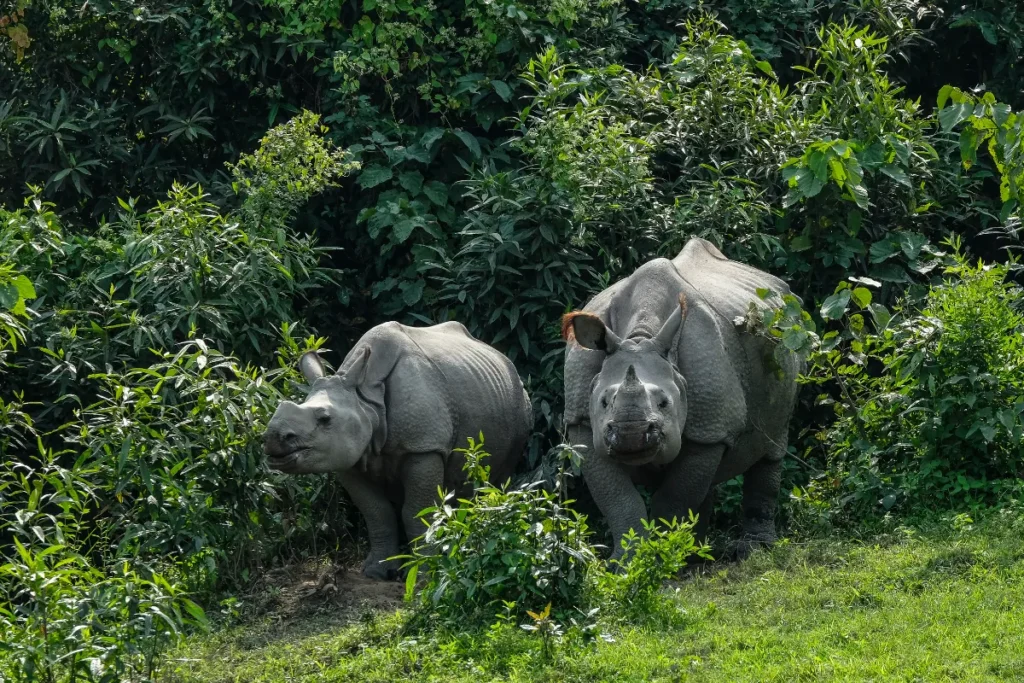
Kaziranga National Park in Assam, northeastern India, is a UNESCO World Heritage Site known for its large population of greater one-horned rhinoceroses. Established to protect wildlife in the Brahmaputra River floodplains, the park features tall grasslands, wetlands, shallow pools, and woodland habitats.
It also supports Asian elephants, Bengal tigers, wild water buffalo, swamp deer, and many bird species. Jeep safaris are a popular way to explore designated tourism zones and observe wildlife across this distinctive landscape.
Kaziranga National Park at a Glance
- Area: The UNESCO World Heritage property covers 42,996 hectares (429.96 sq. km). The wider protected area has expanded through additional land notifications.
- Location: Assam, northeastern India, mainly in the Brahmaputra Valley.
- History: Kaziranga was declared a reserve forest in 1908, became a sanctuary in 1916, and was declared a national park in 1974. UNESCO added it to the World Heritage List in 1985.
- Best time to visit: November to April, subject to official opening dates and local conditions. Heavy monsoon flooding can affect access and lead to seasonal closures.
- Flora: Tall elephant grass, reeds, riverine woodland, semi-evergreen forests, and wetland vegetation.
- Fauna: Greater one-horned rhinoceros, Bengal tiger, Asian elephant, wild water buffalo, swamp deer, and wild boar.
- Birdlife: Resident and migratory waterbirds, including storks, pelicans, and other wetland species.
- Popular activities: Regulated jeep safaris, birdwatching, and wildlife photography from permitted areas.
- Distance from Guwahati: Approximately 190–220 km by road, depending on the park entrance and route.
- Main gateway: Kohora, near the Central Range entrance.
3. Bandhavgarh National Park, India
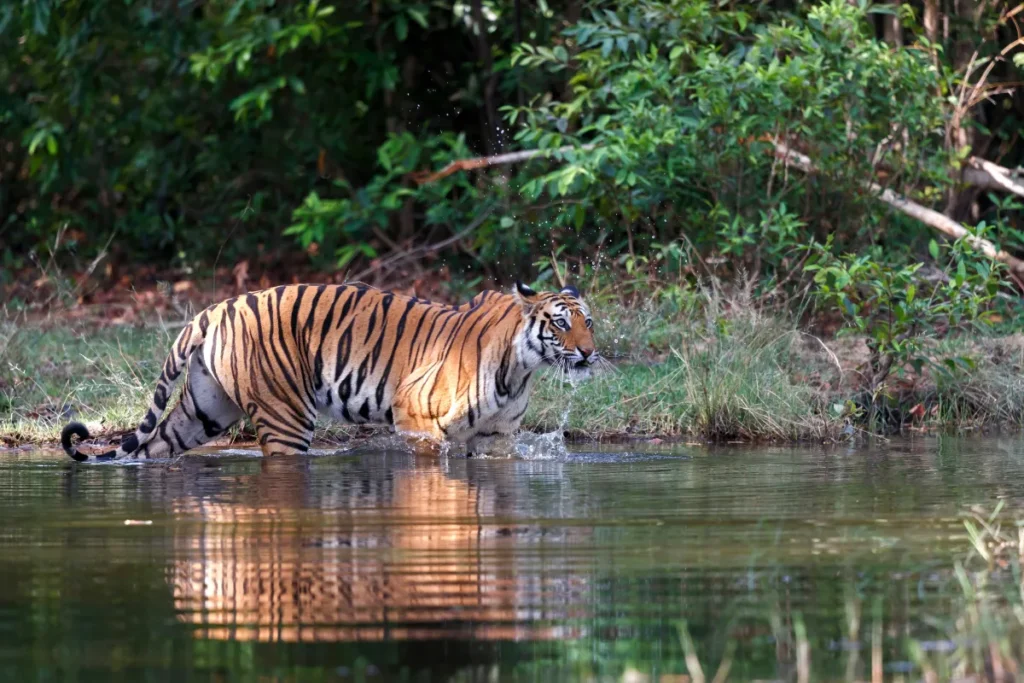
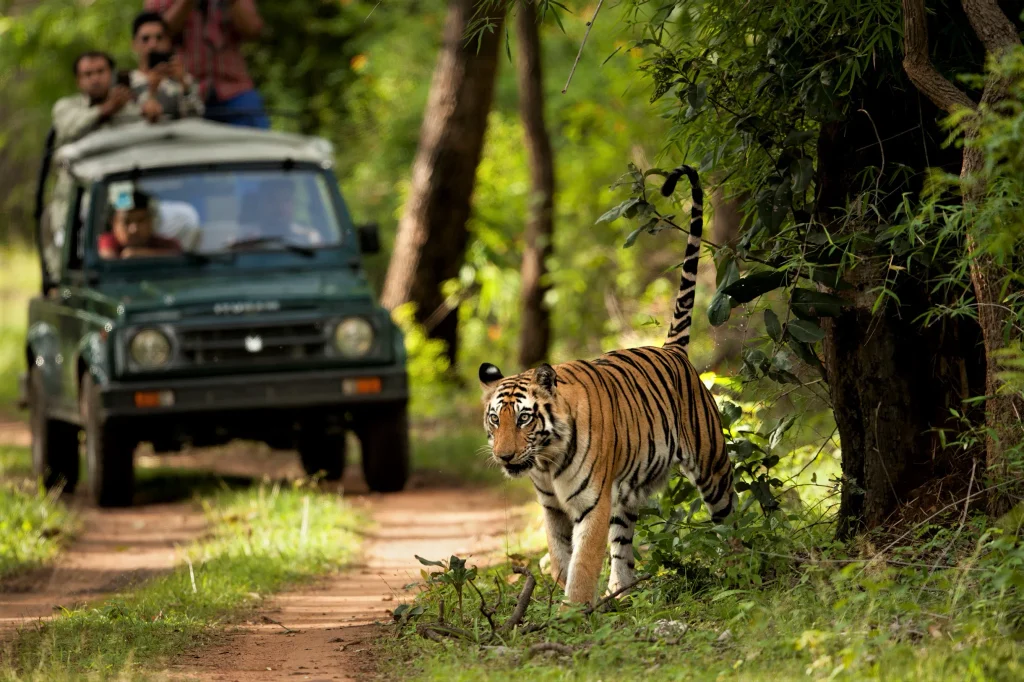
Bandhavgarh National Park, in Madhya Pradesh, India, is a well-known site for travelers interested in Bengal tigers. Its forests, bamboo vegetation, grasslands, rocky hills, and streams provide habitat for tigers, leopards, deer, langurs, and many bird species.
Visitors explore designated tourism zones through regulated jeep safaris with authorized guides. The area also has historical attractions, including Bandhavgarh Fort and archaeological remains. Although the reserve is popular for tiger sightings, seeing a tiger is never guaranteed.
Bandhavgarh National Park at a Glance
- Area: The wider Bandhavgarh Tiger Reserve covers approximately 1,536.94 sq. km, including core and buffer areas.
- Location: Eastern Madhya Pradesh, mainly in Umaria district, with parts extending into neighbouring districts.
- History: A 105 sq. km area was declared a national park in 1968, and the reserve became part of Project Tiger in 1993. Bandhavgarh is also known for its historic fort, located on a hill within the park. According to local legend, Lord Rama gave the fort to his brother Lakshmana to guard Lanka, inspiring the name Bandhavgarh, commonly interpreted as “brother’s fort.” The surrounding forests are also associated with the history of white tigers in the region.
- Best time to visit: October through June for core-zone safaris, depending on the official schedule. It can be hot in the summer, and the rules for accessing buffer zones can vary.
- Flora: The reserve has sal forests, mixed deciduous woodland, bamboo, grasslands, and streamside vegetation in parts.
- Fauna: Bengal tiger, leopard, sloth bear, gaur, sambar deer, spotted deer, wild boar, langurs
- Birdlife: Forest birds and raptors, along with many other resident species.
- Popular activities: Guided jeep safaris, wildlife photography, birdwatching, and visits to selected historical sites where permitted.
- Distance from Jabalpur: The reserve area is 170 km away from Jabalpur; the distance will vary depending on where you enter and stay.
- Tala village is a major gateway and an important base for safari accommodation and tourism services.
4. Yala National Park, Sri Lanka
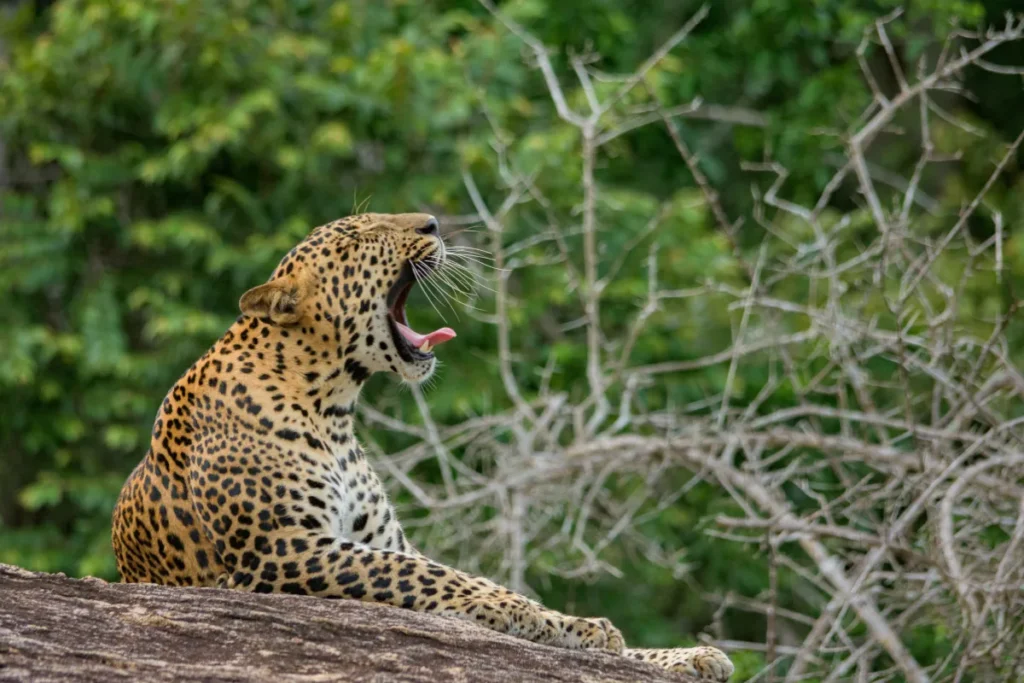
Yala National Park in southeastern Sri Lanka is widely known for its leopard population and varied wildlife habitats. The park is home to the Sri Lankan leopard (Panthera pardus kotiya), a subspecies endemic to Sri Lanka.
Its dry forests, scrubland, grasslands, lagoons, wetlands, and coastal areas support Asian elephants, sloth bears, crocodiles, deer, and numerous bird species.
Yala also preserves traces of Sri Lanka’s ancient history. Sithulpawwa, an important Buddhist monastic site within the park, features historic rock temples and archaeological remains associated with religious life dating back more than 2,000 years. Ancient irrigation tanks scattered across the landscape reflect the region’s agricultural past.
Today, these water sources also help sustain wildlife, particularly during dry periods. Guided jeep safaris are the main visitor activity, with Block 1 among the best-known areas for leopard watching. Wildlife sightings depend on animal movements, weather, and visitor access.
Yala National Park at a Glance
- Area: Approximately 979 sq. km across its main protected sections.
- Location: Southeastern Sri Lanka, across parts of the Southern and Uva provinces.
- History: The area was designated a wildlife sanctuary in 1900 and declared a national park in 1938. Sithulpawwa’s ancient monastic complex and the remains of historic irrigation systems reflect the area’s cultural and agricultural heritage.
- Best time to visit: February to July is often considered favorable for wildlife viewing in parts of the park. Seasonal access and closures vary, so check official notices before travelling.
- Flora: Dry-zone forests, thorn scrub, grasslands, mangroves, and vegetation around lagoons and wetlands.
- Fauna: Sri Lankan leopard, Asian elephant, sloth bear, spotted deer, wild boar, crocodiles, and other mammals.
- Birdlife: Waterbirds, storks, eagles, peafowl, and migratory birds.
- Popular activities: Guided jeep safaris, birdwatching, wildlife photography, and visits to permitted cultural and archaeological sites.
- Distance from Colombo: Roughly 250–300 km by road, depending on the entrance and route.
- Main gateways: Palatupana and Katagamuwa provide access to different sections of the park.
5. Kinabatangan River, Malaysian Borneo
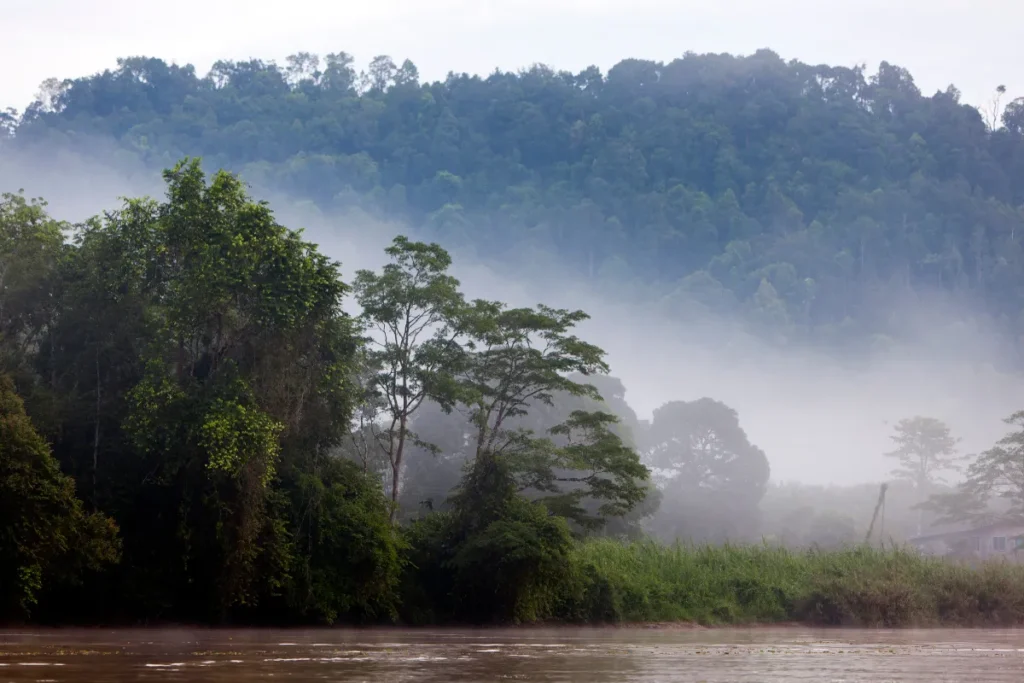
The Kinabatangan River in Sabah, Malaysian Borneo, is one of Malaysia’s longest waterways. Wild orangutans, proboscis monkeys, Bornean pygmy elephants, hornbills, macaques, and crocodiles inhabit the forests and wetlands around the park.
Dawn and late-afternoon boat trips give visitors opportunities to scan the riverbanks and tree canopies for wildlife. Guided forest walks may also be available in selected areas. The destination is particularly appealing to travelers interested in primates, birdwatching, and observing wildlife from the water.
Kinabatangan River at a Glance
- Area: The Kinabatangan Wildlife Sanctuary covers approximately 26,000 hectares.
- Location: Sabah, on the east coast of Malaysian Borneo.
- Geography: The Kinabatangan is the second-longest river in Malaysia, with a length of about 560 km.
- History and conservation: The wildlife sanctuary was gazetted in 1997 under the Sabah Wildlife Conservation Enactment. Its forests and wetlands protect important wildlife habitats and ecological corridors.
- Best time to visit: River cruises operate throughout the year, but rainfall, river levels, and animal movements influence viewing conditions.
- Flora: Riverine forests, tropical rainforest, wetlands, and forest vegetation along the river.
- Fauna: Wild orangutans, proboscis monkeys, Bornean pygmy elephants, macaques, and crocodiles.
- Birdlife: Hornbills, kingfishers, and other resident and migratory birds.
- Popular activities: River cruises at sunrise and sunset, birdwatching, guided forest walks where available, and community-based nature experiences.
- Distance from Kota Kinabalu: The destination is on the east coast of Sabah, normally accessed via Sandakan or overland, depending on the route and total journey time.
- The main visitor areas of Sukau, Bilit, and Abai are popular bases for river-based wildlife trips.
6. Gunung Leuser National Park, Indonesia
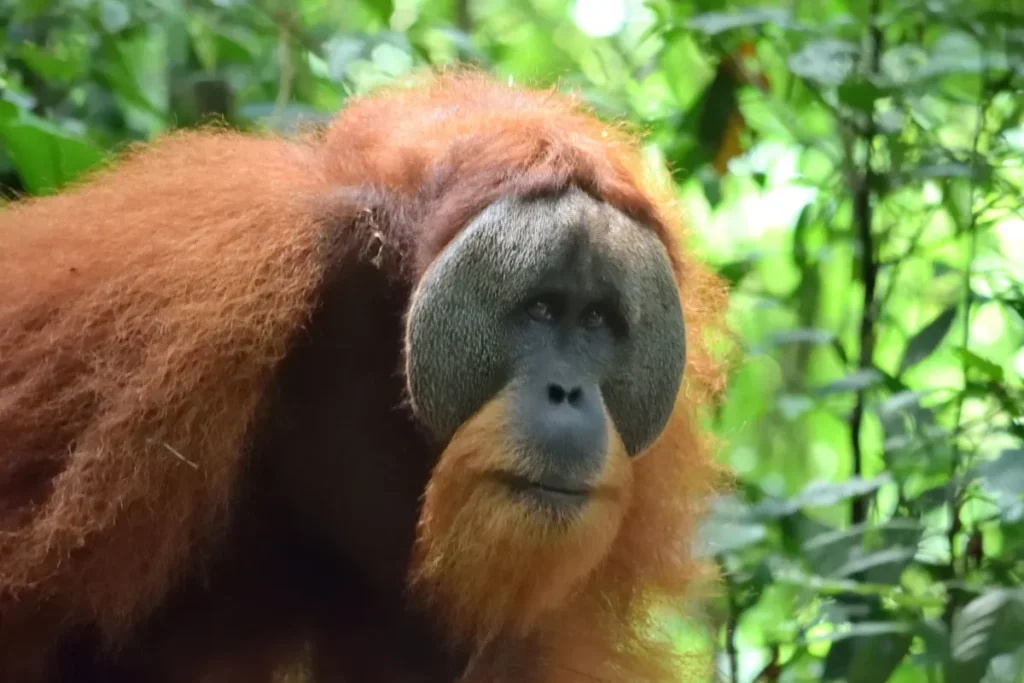
Gunung Leuser National Park in northern Sumatra, Indonesia, protects tropical rainforest, river valleys, and mountain ecosystems. It is an important habitat for the endangered Sumatran orangutan, as well as Sumatran tigers, elephants, and other wildlife.
Bukit Lawang is a well-known gateway for guided rainforest trekking, where visitors can learn about orangutan behavior and forest conservation. Trails can be steep, wet, and muddy, so good footwear, drinking water, and a reasonable level of fitness are important.
Gunung Leuser National Park at a Glance
- Area: Approximately 830,880 hectares (8,308.8 sq. km), according to Indonesia’s conservation authority. Older UNESCO mapping records a different boundary figure.
- Location: Aceh and North Sumatra provinces, on the island of Sumatra.
- History: Conservation efforts began during the Dutch colonial period. Gunung Leuser was declared a national park in 1980 and became part of the UNESCO-listed Tropical Rainforest Heritage of Sumatra in 2004.
- Best time to visit: May to September is often convenient for trekking, but rain can occur throughout the year. Trail conditions vary by location and weather.
- Flora: Lowland tropical rainforest, montane forest, subalpine vegetation, orchids, and other tropical plants.
- Fauna: Sumatran orangutans, Sumatran tigers, Sumatran elephants, and Sumatran rhinoceroses. The larger mammals are rare and are not expected sightings on an ordinary trek.
- Birdlife: Hornbills and hundreds of other forest bird species.
- Popular activities: Guided rainforest trekking, wildlife observation, birdwatching, and nature education.
- Distance from Medan: Bukit Lawang is approximately 90 km northwest of Medan; road travel time varies with traffic and road conditions.
- Main gateway: Bukit Lawang is a popular starting point for guided rainforest treks.
7. Komodo National Park, Indonesia
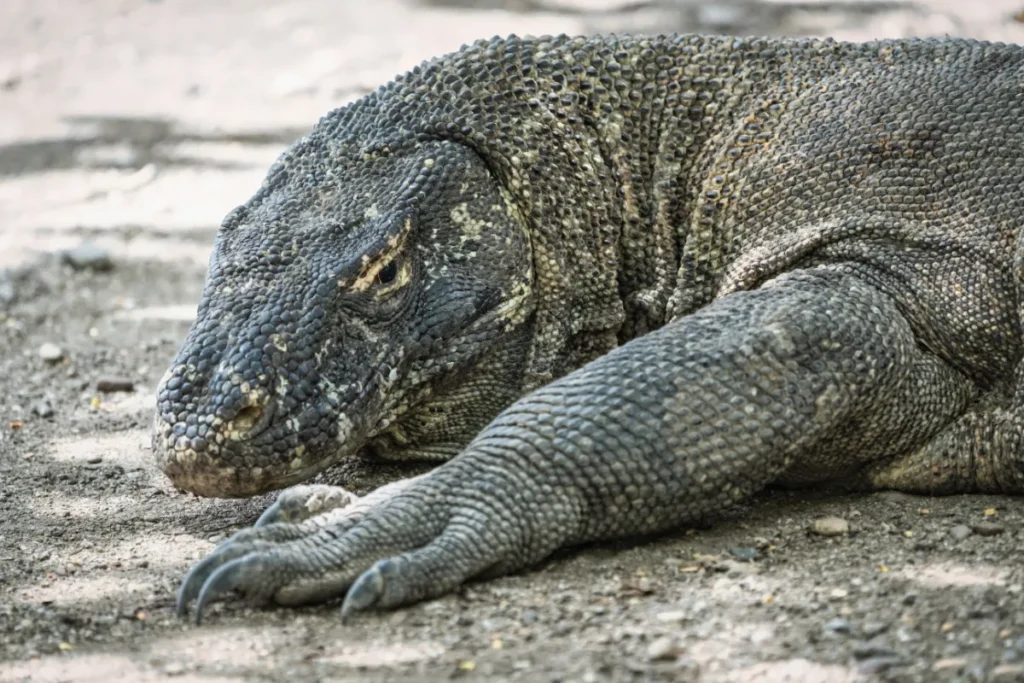
Komodo National Park in Indonesia’s East Nusa Tenggara province is renowned for the Komodo dragon, the world’s largest living lizard. Its islands feature dry hills, savanna grasslands, woodland patches, and coastal habitats, while the surrounding waters contain coral reefs and diverse marine life.
Visitors can join ranger-guided walks to observe Komodo dragons safely and take boat trips between islands. Depending on the itinerary and sea conditions, trips can also include snorkeling and other marine activities.
Visitors must follow ranger instructions and remain at a safe distance from wildlife.
Komodo National Park at a Glance
- Area: Approximately 219,322 hectares (2,193.22 sq. km), including land and marine areas.
- Location: East Nusa Tenggara, Indonesia, around the islands of Komodo, Rinca, and Padar.
- History: The park received official national park protection in 1980 and was inscribed as a UNESCO World Heritage Site in 1991.
- Best time to visit: April to November is generally preferred for island trips, but weather and sea conditions can vary.
- Flora: Savanna grasslands, deciduous woodland, dry tropical vegetation, and coastal plant communities.
- Fauna: Komodo dragons, deer, wild pigs, macaques, and other island wildlife.
- Marine life: Coral reef fish, rays, sea turtles, and other marine species.
- Birdlife: Island and coastal birds, including cockatoos and scrubfowl.
- Popular activities: Ranger-guided walks, boat excursions, snorkeling, wildlife observation, and nature photography.
- Distance from Jakarta: Most visitors travel by air to Labuan Bajo, followed by a boat trip to the park. Travel time depends on flight connections and the chosen island itinerary.
- Main gateway: Labuan Bajo, on Flores Island.
8. Khao Yai National Park, Thailand
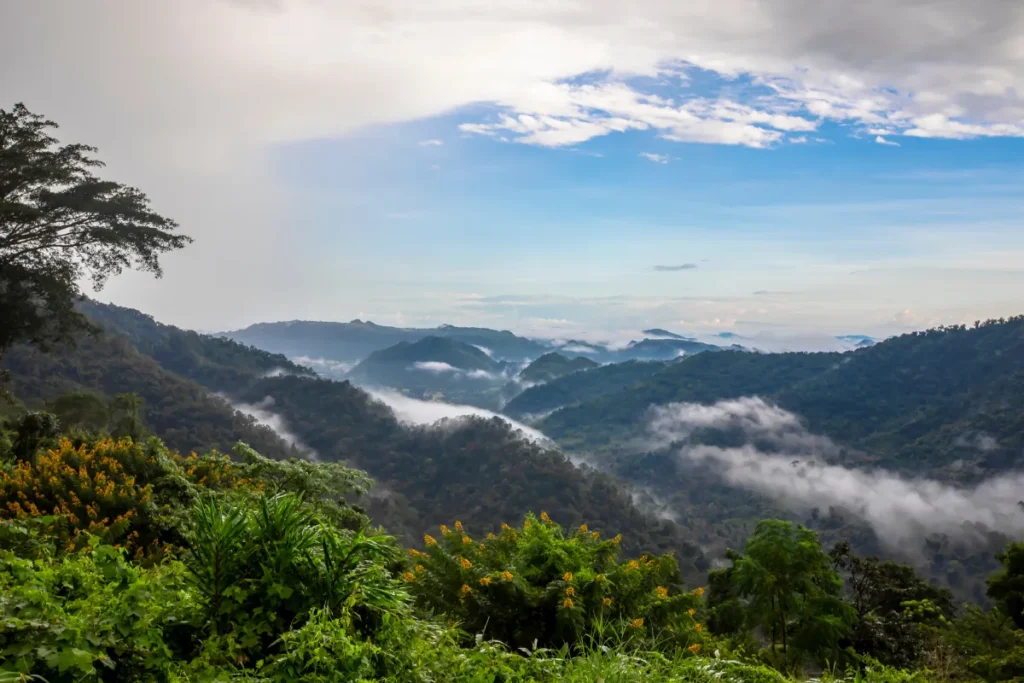
Khao Yai National Park in Thailand is a convenient destination for travelers seeking forest wildlife and outdoor activities. Located northeast of Bangkok, the park protects tropical and subtropical forests, grasslands, and mountain habitats.
Its wildlife includes Asian elephants, gibbons, macaques, deer, hornbills, and many other species. Visitors can explore designated trails, join guided nature walks, watch birds, and take part in officially operated night drives where available.
Although elephants are among the park’s best-known animals, sightings are never guaranteed.
Khao Yai National Park at a Glance
- Area: Approximately 2,168 sq. km.
- Location: Central and northeastern Thailand, extending across parts of Nakhon Ratchasima, Prachinburi, Nakhon Nayok, and Saraburi provinces.
- History: Thailand’s first national park, established in 1962. In 2005, it became part of the UNESCO-listed Dong Phayayen–Khao Yai Forest Complex.
- Best time to visit: November to February generally offers cooler conditions for outdoor activities. The rainy season brings lush vegetation but can affect trails and access.
- Flora: Tropical and subtropical evergreen forests, mixed deciduous woodland, grasslands, and montane vegetation.
- Fauna: Asian elephants, gibbons, macaques, deer, wild pigs, and other forest mammals.
- Birdlife: Hornbills, barbets, broadbills, and many other forest birds.
- Popular activities: Guided wildlife tours, hiking, birdwatching, waterfall visits, and authorized night drives where available.
9. Ladakh, India
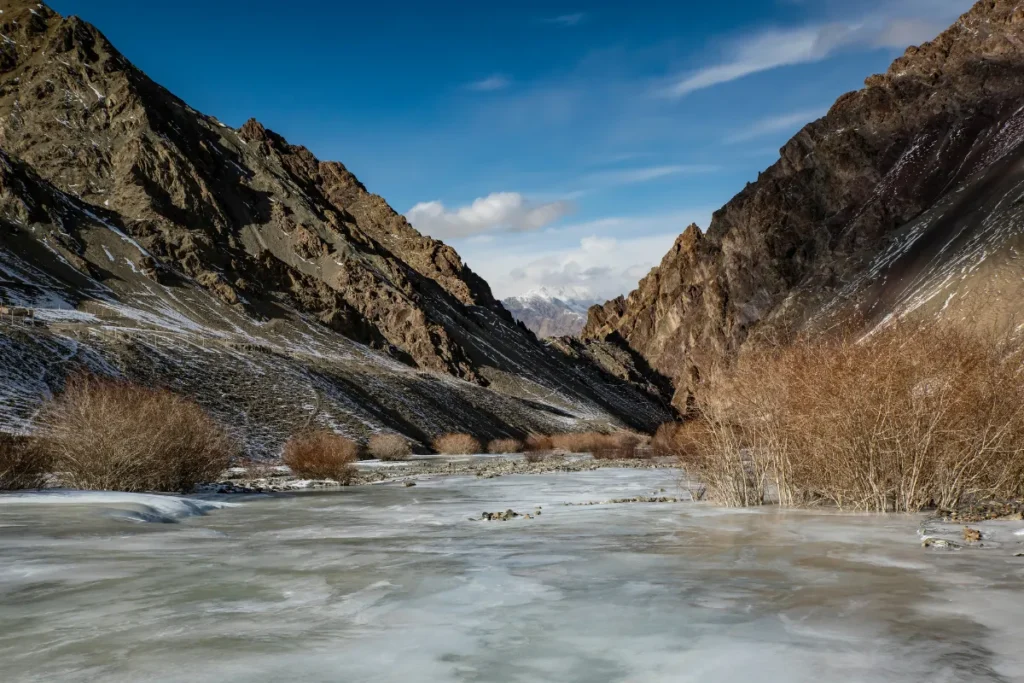
Ladakh in northern India offers a high-altitude wildlife experience that differs from the jeep safaris of tropical Asia. Its cold deserts, rocky mountains, and alpine valleys provide habitat for snow leopards, blue sheep, Himalayan ibex, Tibetan wolves, and high-altitude birds.
Hemis National Park is a major area for snow leopard tracking. Guided expeditions often involve walking, scanning mountain slopes, and observing wildlife from suitable viewpoints.
The cold, altitude, and elusive nature of snow leopards make patience and careful preparation essential.
Ladakh Wildlife at a Glance
- Area: Hemis National Park covers approximately 4,400 sq. km.
- Location: Ladakh, in northern India, within the western Himalayas.
- History: Hemis was established as a national park in 1981. It is known for protecting high-altitude wildlife and mountain habitats.
- Best time to visit: December to March is a common period for snow leopard tracking, when the animals may descend to lower elevations in search of prey. The best dates depend on local conditions.
- Flora: Alpine scrub, cold-desert vegetation, grasses, and sparse high-altitude shrubs.
- Fauna: Snow leopard, blue sheep (bharal), Himalayan ibex, Tibetan wolf, and other mountain wildlife.
- Birdlife: High-altitude species, including golden eagles and other mountain birds.
- Popular activities: Guided snow leopard tracking, wildlife photography, birdwatching, and high-altitude nature walks.
- Distance from Leh: Hemis National Park is accessible from Leh by road; the distance depends on the chosen tracking area and route.
- Main gateway: Leh is the principal travel base for wildlife trips in Ladakh.
How to Choose the Right Wildlife Gateways in Asia
The best wildlife destination in Asia depends on the animals you want to see, the activities you enjoy, your travel experience, and the time of year you plan to visit.
Some parks offer accessible jeep safaris, while others require rainforest trekking, boat trips, or specialized high-altitude expeditions.
- Choose by animal: Visit Chitwan in Nepal or Kaziranga in India for greater one-horned rhinoceroses, Bandhavgarh for tiger safaris, Yala for leopards, Borneo or Sumatra for orangutans, and Ladakh for snow leopards.
- Choose by safari style: Opt for jeep safaris in Chitwan, Kaziranga, Bandhavgarh, or Yala; river cruises along the Kinabatangan River; rainforest trekking in Gunung Leuser; or ranger-guided walks to see Komodo dragons.
- Choose by difficulty: Chitwan and many jeep-safari locations suit travelers seeking wildlife experiences without strenuous trekking. Gunung Leuser involves forest trekking, while snow leopard expeditions in Ladakh require preparation for cold weather, high altitudes, and remote conditions.
- Choose by travel season: Check local weather, park opening dates, seasonal closures, and animal-viewing conditions before booking. The best time varies by spot and activity.
- Choose by travel style: Families and first-time safari travelers may prefer accessible destinations with varied activities, such as Chitwan or Khao Yai. Wildlife photographers and experienced nature travellers may prefer specialist tiger safaris, rainforest expeditions, or snow leopard tracking.
Tips:
- Compare travel time, accommodation, guide expertise, permitted activities, and conservation practices before choosing. Wildlife sightings are never guaranteed, so select a destination for its overall natural experience as well as its headline species.
- Before booking, verify park opening dates, permitted activities, entry requirements, and seasonal conditions. Choose responsible wildlife operators, follow local regulations, and maintain a safe distance from animals. Remember that sightings are never guaranteed, particularly for elusive species such as tigers, leopards, and snow leopards.
Best Jungle Safari in Asia by Traveller Type
The right wildlife destination depends on your interests, travel style, and experience. Use this guide to find destinations that match your plans.
- First-time safari travelers: Chitwan National Park, Nepal, offers jeep safaris, canoe rides, birdwatching, and guided jungle walks.
- Tiger enthusiasts: Bandhavgarh and Ranthambore national parks in India are popular choices for guided tiger safaris.
- Rhinoceros lovers: Chitwan in Nepal and Kaziranga in India are known for their greater one-horned rhinoceros populations.
- Wildlife photographers: Kaziranga, Bandhavgarh, and Yala offer opportunities to photograph diverse wildlife in different habitats.
- Families with children: Chitwan and Khao Yai in Thailand provide a variety of outdoor activities, subject to age restrictions and local safety regulations.
- Adventurers: Gunung Leuser in Sumatra offers rainforest trekking, whereas Ladakh is ideal for high-altitude snow leopard expeditions.
- For birdwatchers: Chitwan, Kaziranga, and Khao Yai have a wealth of birdlife in their wetlands, grasslands, and forests.
- For the Marine Wildlife Lovers: Go for island hopping and snorkeling in Komodo National Park, Indonesia, to spot the marine biodiversity.
Firstly, plan your travel time, physical demands, seasonal conditions, and guided activities before you book. Wildlife sightings depend on natural conditions and cannot be guaranteed, as animals roam according to their patterns and schedules.
Best Time for a Wildlife Safari in Asia
The best time for a wildlife safari in Asia depends on the destination, climate, and species you hope to see. Use this table to compare typical visiting periods and check local park announcements before booking.
| Wildlife destination | Country | Best time to visit |
| Chitwan National Park | Nepal | October–March |
| Kaziranga National Park | India | November–April, subject to official opening dates |
| Bandhavgarh and Ranthambore National Parks | India | Generally October–June, subject to park and zone schedules |
| Yala National Park | Sri Lanka | February–July in many areas; conditions vary by section |
| Kinabatangan River | Malaysia (Borneo) | Year-round; rainfall and river levels affect viewing conditions |
| Gunung Leuser National Park | Indonesia (Sumatra) | May–September is often convenient for trekking; rain is possible year-round |
| Komodo National Park | Indonesia | April–November is commonly favored for island trips |
| Khao Yai National Park | Thailand | November–February for generally cooler conditions |
| Ladakh (snow leopard tracking) | India | December–March, depending on local conditions |
Seasonal conditions vary, and weather, park closures, or access restrictions can affect activities. Check official local guidance before travelling.
How to Experience Wildlife Responsibly in Asia
Responsible wildlife tourism helps protect animals, preserve natural habitats, and support local communities. Follow these guidelines when visiting wildlife destinations across Asia.
- Choose licensed guides and responsible operators: Book safaris and wildlife excursions with authorized guides who follow local conservation rules and prioritize animal welfare.
- Maintain a safe distance: Observe animals quietly from a suitable distance. Never approach, chase, corner, or surround wildlife for photographs.
- Never feed wild animals: Human food can harm animals, change their natural behavior, and make them dependent on people.
- Avoid exploitative wildlife attractions: Do not support activities involving animal performances, forced handling, or close-contact encounters that compromise animal welfare.
- Follow park regulations: Stay on permitted trails, use authorized safari routes, respect visitor limits, and follow your guide’s instructions.
- Photograph wildlife ethically: Avoid flash when prohibited, keep noise low, and never disturb nests, dens, or resting animals to get a better picture.
- Reduce your environmental impact: Carry reusable water bottles, dispose of waste properly, avoid single-use plastics, and leave natural habitats undisturbed.
- Support local communities: Choose locally operated accommodation, guides, and tourism services that contribute to livelihoods and conservation.
- Respect wildlife sightings: Animals move freely in their natural habitats, so sightings are never guaranteed. Choose operators who do not promise sightings or disturb animals to deliver them.
Responsible wildlife travel allows you to enjoy Asia’s remarkable biodiversity while helping protect it for future generations.
Why Chitwan Deserves a Place on Your Jungle Safari Itinerary
Chitwan stands out for how wildlife exploration connects with Nepal’s lowland landscapes and local communities. Unlike high-altitude wildlife destinations that require remote travel and specialized preparation, Chitwan is easily accessible and fits smoothly into a broader Nepal holiday.
Its location in the subtropical Terai offers a striking contrast to the country’s high Himalayan scenery. Visitors can combine wildlife activities with visits to traditional Tharu villages, opportunities to sample local cuisine, and community-based tourism experiences. This combination makes Chitwan a rewarding addition to a wider Nepal itinerary.
Chitwan is known for its greater one-horned rhinoceroses, Bengal tigers, and gharials. Visitors can explore the park through permitted jeep safaris, canoe rides, and guided walks. The surrounding buffer zone features a wide range of stays, from eco-lodges to luxury jungle retreats.
A two-to-three-day stay allows time for guided wildlife activities, cultural experiences, and relaxation. For anyone exploring Asia, Chitwan delivers a rich look at the Terai region and a balanced model of conservation, culture, and community life. Chitwan Jungle Safari Tour is one of the leading safari agencies in Nepal. If Chitwan Safari is on your bucket list or you have any queries, you can contact us.
- +977 9802014557 (Also available on WhatsApp)
- info@chitwanjunglesafaritour.com
Frequently Asked Questions
1. What is the best time for a wildlife safari in Asia?
The best time depends on the destination and species. Dry-season months often improve visibility in some grassland and wetland parks, while monsoon rains can limit access or cause seasonal closures. Rainforest wildlife trips operate under different conditions, and snow leopard tracking in Ladakh is generally a winter activity. Check local park dates, weather, and seasonal restrictions before booking.
2. What animals can be found in Asia?
Asia is home to thousands of animal species across rainforests, grasslands, wetlands, deserts, mountains, and coastal waters. Notable animals include Asian elephants, Bengal tigers, giant pandas, snow leopards, orangutans, one-horned rhinoceroses, red pandas, Komodo dragons, wild water buffalo, and Bactrian camels. The continent also supports diverse birds, reptiles, amphibians, and marine animals.
3. Which is the largest land animal in Asia?
The Asian elephant is the largest living land animal in Asia. Adult males can weigh around 4,000–5,000 kg, although size varies by subspecies and individual. Asian elephants live in parts of South and Southeast Asia, including India, Nepal, Sri Lanka, Thailand, and Indonesia.
4. Is Chitwan National Park worth visiting?
Chitwan is worth considering if you want a mix of wildlife activities in Nepal, particularly rhino viewing, birdwatching, and guided jeep or canoe safaris. It also complements trips to Kathmandu, Pokhara, and the Himalayas by introducing a different landscape and ecosystem. It suits first-time safari travelers and visitors who want to include wildlife in a wider Nepal itinerary, although individual animal sightings cannot be guaranteed.
5. How many days do you need for Chitwan National Park?
Allowing two to three days is a practical starting point for a Chitwan visit. This usually provides time for several guided activities, such as a jeep safari, birdwatching, or a canoe trip when available, without rushing every excursion into one day. A longer stay gives you more flexibility for different habitats and activities. Your ideal duration depends on your interests, travel schedule, and the itinerary offered by your operator.
6. Where can you see orangutans in the wild?
Wild orangutans can be observed in parts of Malaysian Borneo and Sumatra in Indonesia. Guided rainforest experiences around suitable habitats, including areas near the Kinabatangan River and Gunung Leuser National Park, offer opportunities to look for them. Choose responsible operators who maintain appropriate distances and never feed or bait the animals.
7. What is the best wildlife destination in Asia?
There is no single best wildlife destination in Asia, as each park offers different animals and experiences.
- For rhinoceroses: Chitwan National Park in Nepal and Kaziranga National Park in India.
- For tiger safaris: Bandhavgarh and Ranthambore National Parks in India.
- For leopards: Yala National Park in Sri Lanka.
- For orangutans: Gunung Leuser National Park in Sumatra, Indonesia.
The best choice depends on the animals you want to see, the season, and your preferred safari activities.
8. Which country in Asia is best for wildlife safaris?
India, Nepal, Sri Lanka, Malaysia, and Indonesia each offer different wildlife experiences. India is known for tiger reserves and diverse national parks. Nepal offers rhino-focused safaris and birdwatching in Chitwan and other protected areas.
Sri Lanka is known for leopard and elephant viewing, while Malaysian Borneo and Indonesian Sumatra are important destinations for rainforest wildlife, including orangutans. Indonesia’s Komodo National Park is known for Komodo dragons.
9. Where is the best place to see tigers in Asia?
India is a major destination for wild Bengal tiger safaris, with reserves such as Bandhavgarh and Ranthambore attracting visitors hoping to see them. Sightings depend on the tiger’s movements, habitat conditions, safari zone, and time spent in the park.
Choose a licensed operator, follow park rules, and remember that no responsible guide can guarantee a sighting.
10. Where can you see rhinos in Asia?
Chitwan National Park in Nepal and Kaziranga National Park in India are two well-known destinations for seeing the greater one-horned rhinoceros. Both protect important rhino habitats, including grasslands and wetlands.
Visitors can explore designated areas on guided safaris, but the likelihood of seeing rhinos varies with the season, location, and conditions on the day.
Conclusion
Asia offers an incredible range of wildlife experiences, from rhinoceros safaris in Nepal and India to tiger tracking, leopard watching, orangutan encounters, and snow leopard expeditions. Each destination has its landscapes, wildlife, and activities, making it possible to choose a safari that suits your interests, travel style, and available time.
When planning your trip, consider the best visiting season, local regulations, travel time, and the type of wildlife experience you prefer. Choose responsible operators, respect animal habitats, and remember that sightings in the wild are never guaranteed.
Whether you are keen to explore tropical rainforests, cruise along wildlife-rich rivers, or venture into the Himalayas, Asia offers rewarding opportunities to connect with nature.
If you’re planning a wildlife trip to Nepal, Chitwan National Park should be your first choice. Explore Chitwan National Park safari trips where you can compare itineraries, activities, and trip durations for your visit.