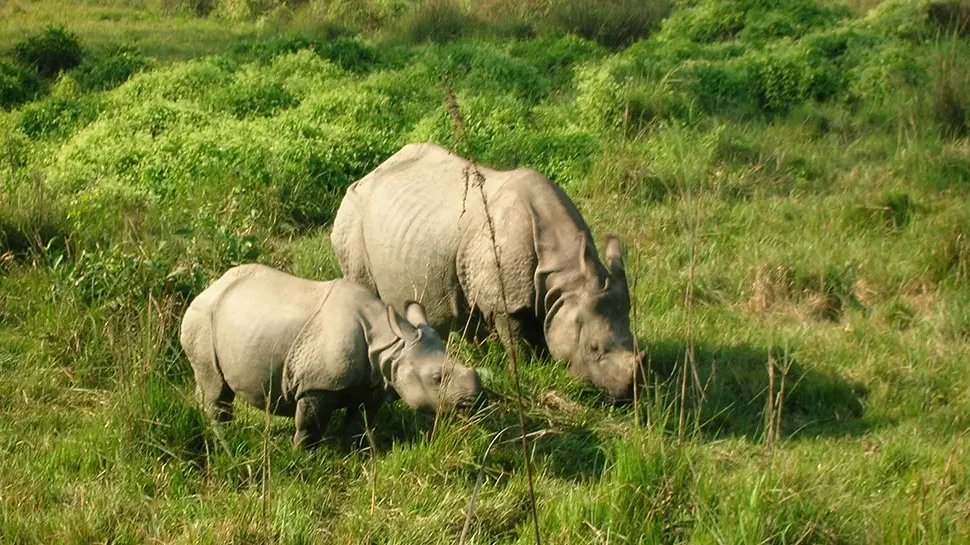
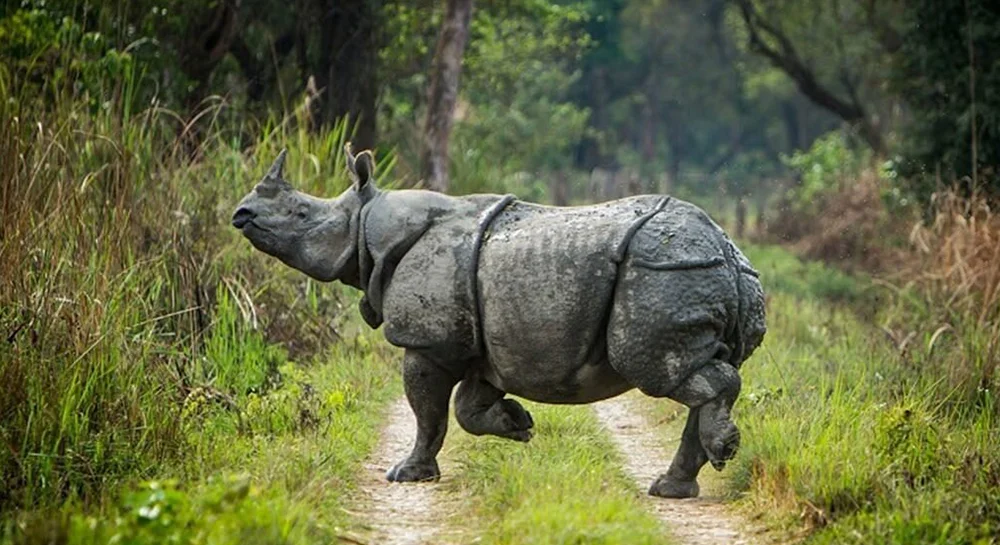
The greater one-horned rhinoceros (Rhinoceros unicornis) is one of the most recognizable wild animals of Nepal’s Terai and a key species protected in Chitwan National Park. For visitors, a Chitwan wildlife safari can be memorable when they see a rhino moving through tall grass, standing near a waterhole, or crossing a forest track. Its single horn, massive body, thick folded skin, and grey-brown appearance make it easy to identify.
Chitwan provides important habitat for rhinos through a combination of floodplain grasslands, wetlands, rivers, riverine forests, and woodland. Grasslands provide feeding areas, while rivers and wetlands supply water and support vegetation. Rhinos move between these habitats depending on food, water, vegetation, and environmental conditions.
The history of rhinos in Chitwan also shows the importance of long-term conservation. In the early 1950s, Chitwan supported a large rhino population, but hunting, poaching, habitat conversion, and increasing human pressure caused a severe decline. By the late 1960s, fewer than 100 rhinos remained in the Chitwan area. The establishment of Chitwan National Park in 1973, together with stronger protection and conservation measures, helped the population recover.
According to Nepal’s Rhino Conservation Action Plan 2024–2034, the 2021 national rhino census recorded 752 greater one-horned rhinos in Nepal, including 694 in the Chitwan National Park landscape, its buffer zone, and adjoining forests. This means Chitwan supported about 92% of Nepal’s recorded rhino population in that census.
The action plan continues to prioritize habitat management, population monitoring, anti-poaching measures, wildlife health, and community participation to secure the species’ future.
Visitors can explore rhino habitat through jeep safaris and guided jungle walks. We do not lie or promise that sightings are guaranteed because rhinos move freely in the wild, but compared to other national parks, there is a very high chance of spotting them.
Our local guides and naturalists use their knowledge of rhino behavior and habitat to read fresh tracks, dung, feeding signs, and wallowing areas when planning safari routes.
This guide covers everything you need to know about rhino safaris in Chitwan National Park, including rhino identification, physical features, habitat, behavior, population history, safari viewing areas, best time to visit, and responsible wildlife-viewing practices.
What Is the One-Horned Rhino?
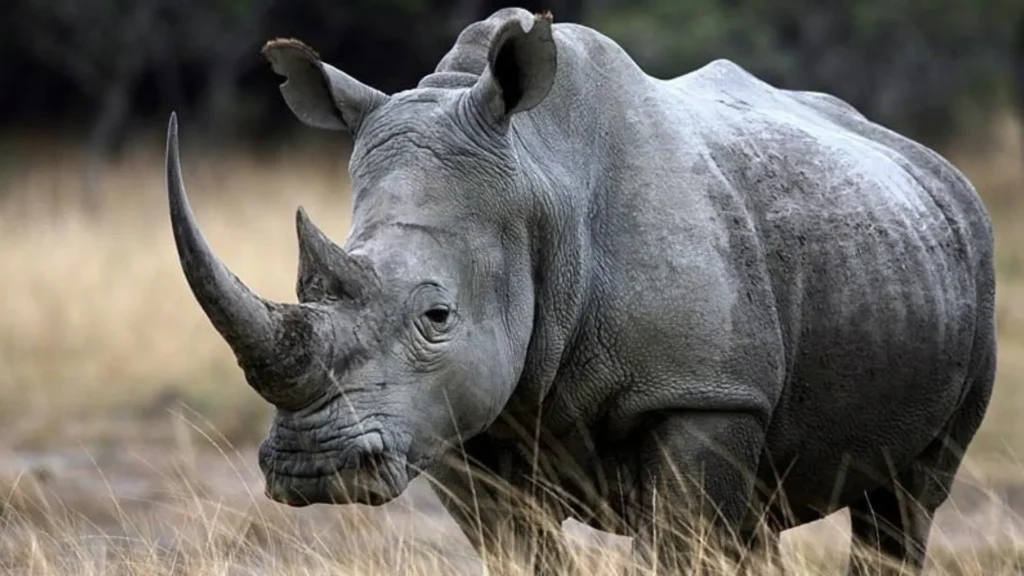
The greater one-horned rhinoceros, commonly known as the Indian rhinoceros, is a large herbivorous mammal of the Indian subcontinent. It belongs to the Rhinocerotidae family and is one of the rhinoceros species native to Asia. Its most distinctive feature is its single nasal horn, while thick folds of skin around the neck, shoulders, and legs provide it with an armor-like appearance. It is mainly found in alluvial floodplains, tall grasslands, wetlands, riverbanks, and riverine forests. These habitats provide the combination of grasses, water, cover, and open areas that rhinos need for feeding, resting, movement, and wallowing.
Classification of One-Horned Rhino
| Category | Details |
| Common name | Greater one-horned rhinoceros |
| Other name | Indian rhinoceros |
| Scientific name | Rhinoceros unicornis |
| Family | Rhinocerotidae |
| Order | Perissodactyla |
| Diet | Herbivorous |
| Main habitat | Floodplain grasslands, wetlands, and riverine forests |
| Distribution in Nepal | Chitwan, Bardia, Shuklaphanta, and Parsa |
| Global conservation status | Vulnerable |
Facts about One-Horned Rhino
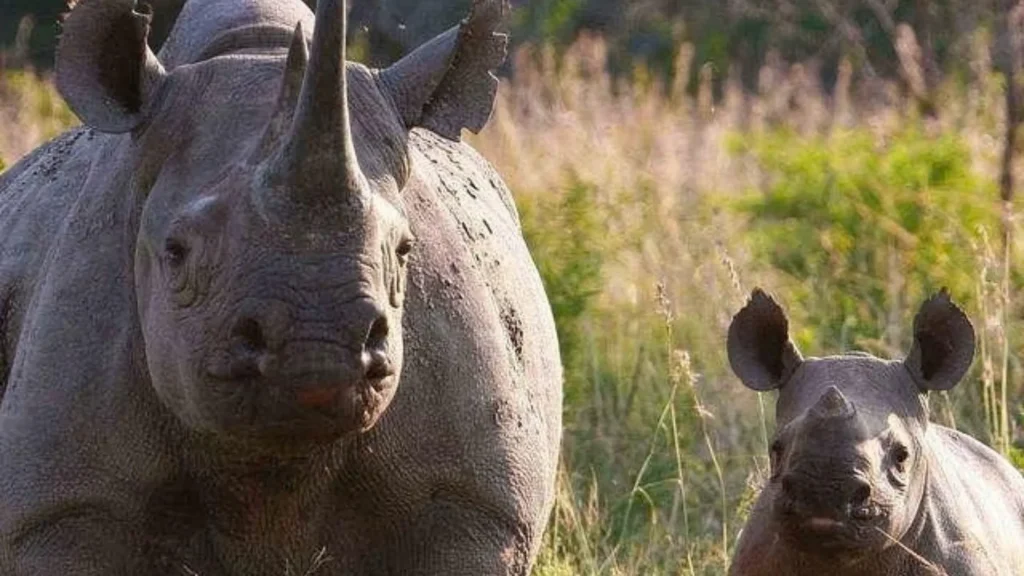
Physical Characteristics
An adult greater one-horned rhino has a large, muscular body supported by short, strong legs. Adults generally reach about 1.75–2 metres at the shoulder and around 3–3.8 metres in body length, although individual size varies. Their thick grey-brown skin forms prominent folds around the neck, shoulders, and legs, producing the characteristic armor-like appearance. The horn is made primarily of keratin, rather than bone. Keratin is the same structural protein found in human hair and fingernails. Rhino horns continue to grow throughout the animal’s life and can be worn down through normal activity.
Habitat and Distribution
Historically, greater one-horned rhinos occupied a much wider range across the northern Indian subcontinent. Human settlement, agricultural expansion, hunting, and habitat loss reduced that range considerably. Today, the species survives mainly in protected areas of Nepal and India. In Nepal, the Chitwan National Park landscape supports the country’s largest rhino population. Suitable habitat includes tall grasslands, wetlands, riverine forests, floodplains, and areas around rivers and waterholes. Maintaining a mixture of these habitats is important because rhinos do not depend on a single vegetation type throughout their daily and seasonal movements.
Diet and Feeding Habits
Greater one-horned rhinos are herbivores that primarily feed on grasses, but they also consume leaves, aquatic plants, and other vegetation. Their feeding habits make productive grasslands particularly important to their survival. In Chitwan, rhinos move between feeding areas and other parts of their habitat. They can graze in tall grasslands, feed around wet areas, and use forested locations for cover and movement. Habitat management therefore plays an important role in maintaining sufficient food resources throughout the landscape.
Social Behavior
Adult greater one-horned rhinos are generally solitary, although their behavior does not mean they avoid all other rhinos. Several individuals can gather where food, water, or suitable wallowing sites are concentrated. Females are often seen with their calves, while adult males may occupy overlapping areas with other rhinos. Their behavior can change when they encounter people, vehicles, other animals, or unfamiliar sounds. Despite their heavy appearance, rhinos can move quickly over short distances. Safari visitors should therefore never attempt to approach, block, chase, or attract a rhino.
Wallowing and Water Use
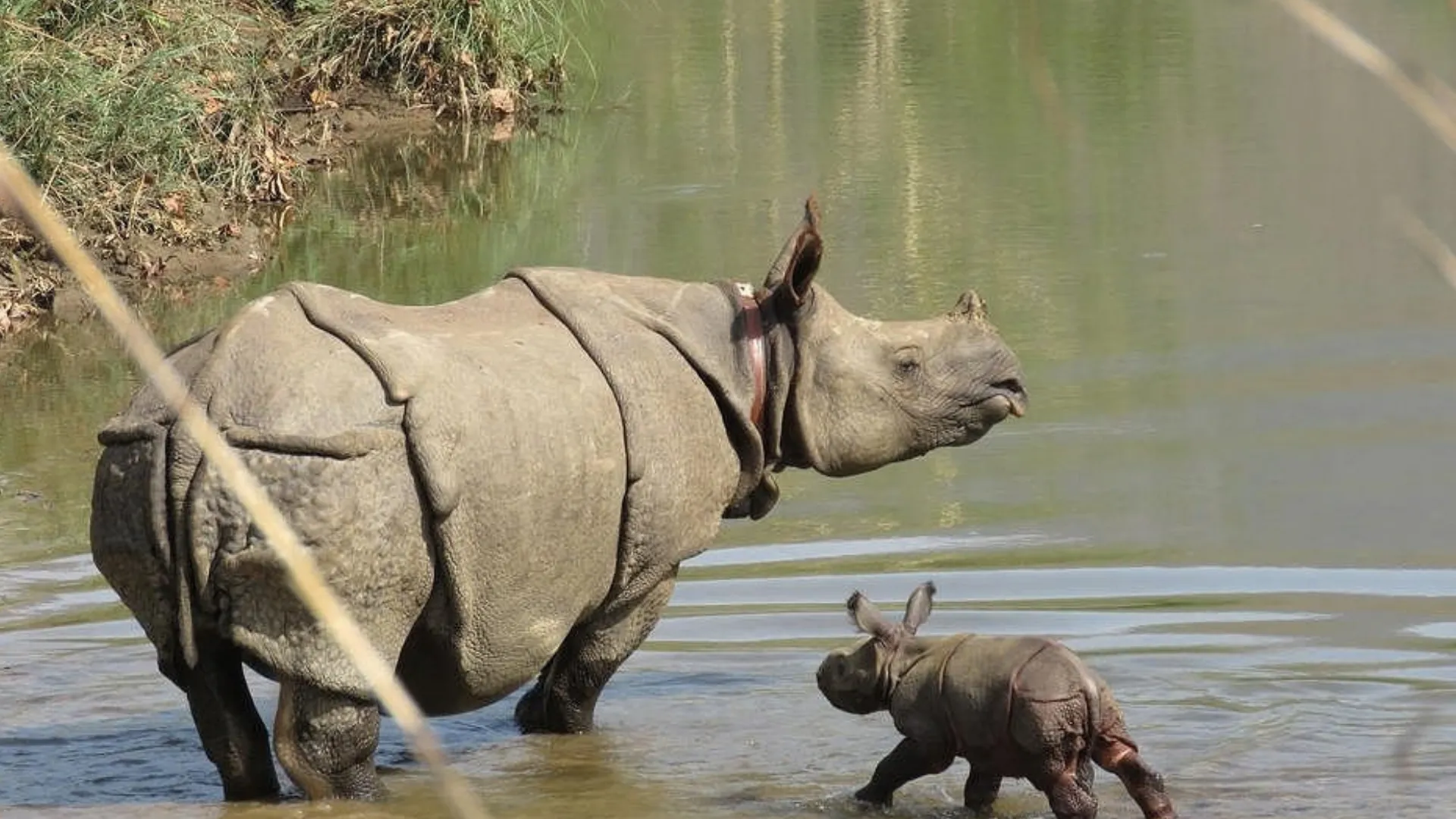
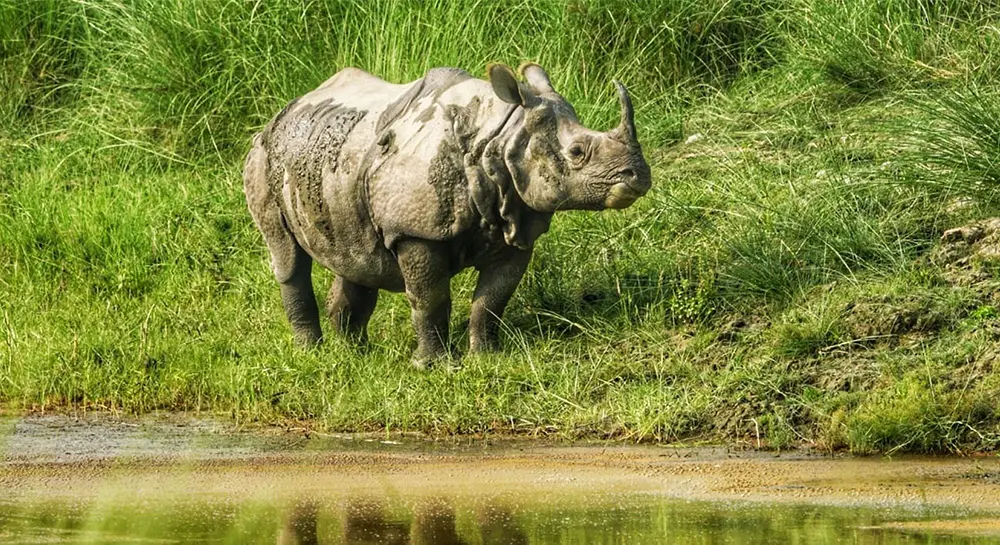
Wallowing is a characteristic behavior of the greater one-horned rhino. Rhinos enter mud and shallow water at suitable wallows, wetlands, and river edges. These areas help them cool their bodies and can reduce irritation caused by heat and insects. Water is an important part of Chitwan’s rhino habitat. Rivers, wetlands, ponds, and wallows provide places where rhinos can drink, bathe, cool themselves, and spend time during hotter periods. This also makes water-rich areas useful locations for wildlife observation, although animals can move away from them at any time.
Senses and Communication
Greater one-horned rhinos rely strongly on hearing and smell to understand their surroundings. Their eyesight is comparatively limited, but they can respond quickly to unfamiliar sounds, movement, and scents. Rhinos communicate through vocal sounds, body movements, scent marking, and other behavioral signals. Visitors should avoid shouting or making sudden movements when a rhino is nearby. Quiet observation provides the animal space and reduces unnecessary disturbance.
Reproduction and Calves
Greater one-horned rhinos have a relatively slow reproductive rate. Females generally give birth to one calf at a time, and the calf remains with its mother while developing and learning to move through its environment. Because rhinos reproduce slowly, the survival of adults and calves has a major influence on long-term population growth. Protecting breeding animals, maintaining suitable habitat, reducing poaching, and managing human-wildlife conflict are therefore important components of conservation.
Key Insights
- Scientific name: The greater one-horned rhino is scientifically known as Rhinoceros unicornis and is also called the Indian rhinoceros.
- Single horn: It has one horn made mainly of keratin. The horn usually measures about 20–61 cm (8–24 inches) and continues growing throughout the animal’s life.
- Body size: An adult stands about 1.75–2 metres at the shoulder and measures around 3–3.8 metres in length.
- Body weight: Adult greater one-horned rhinos generally weigh about 1,800–2,700 kg, although exceptionally large individuals can weigh more.
- Diet: It mainly grazes on grasses and also feeds on other vegetation and aquatic plants, making it a herbivore with a varied plant-based diet.
- Wallowing behavior: Rhinos regularly wallow in mud and water to cool their bodies, reduce insect irritation, and protect their skin from heat and sunlight.
- Solitary nature: Adults generally live alone, although several rhinos can gather around productive feeding grounds, water sources, or wallowing sites.
- Reproduction: A female normally gives birth to one calf after a gestation period of approximately 15–16 months. The calf remains dependent on its mother during its early development.
Our Rhino Safari Packages in Chitwan National Park
We offer many safari tours that focus on various activities. Below are some of the trips that include the rhino safari. If a jungle safari is on your bucket list, you should not miss these packages.

3 Days / 2 Nights Chitwan Highlights Tour – 2 Nights 3 Days
- Jeep safari & canoe ride
- Tharu village & stick dance
- Full board meals & park permits
4 Days / 3 Nights Chitwan Adventure Tour – 3 Nights 4 Days
- Jeep safari, canoeing & jungle walk
- Elephant Breeding Center visit
- Full board meals & park permits
3 Days / 2 Nights 2 Nights Chitwan Adventure with 1 Night Jungle Tower Stay
- 1 night in a jungle tower
- Jeep safari & canoe ride
- Full board meals & park permits
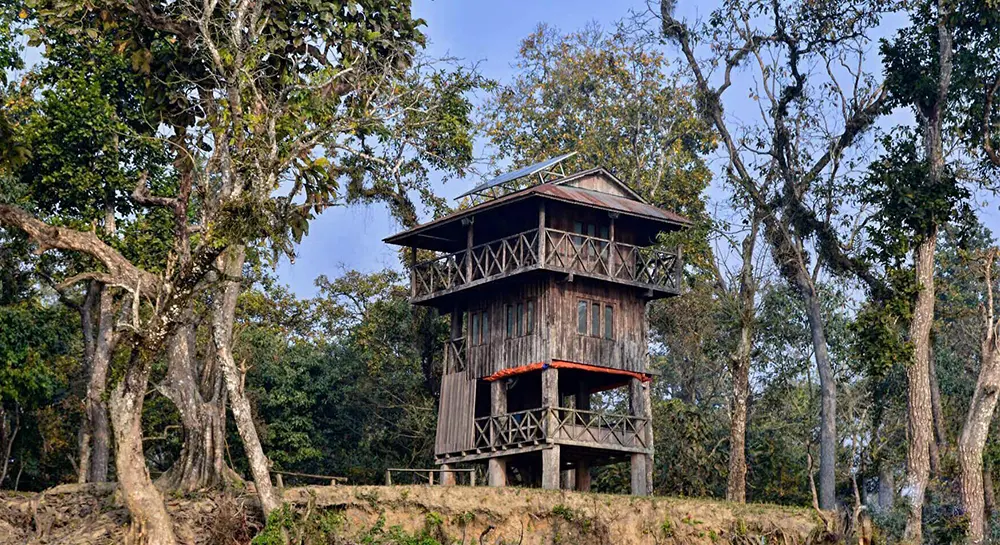
Population of One-Horned Rhinos in Nepal
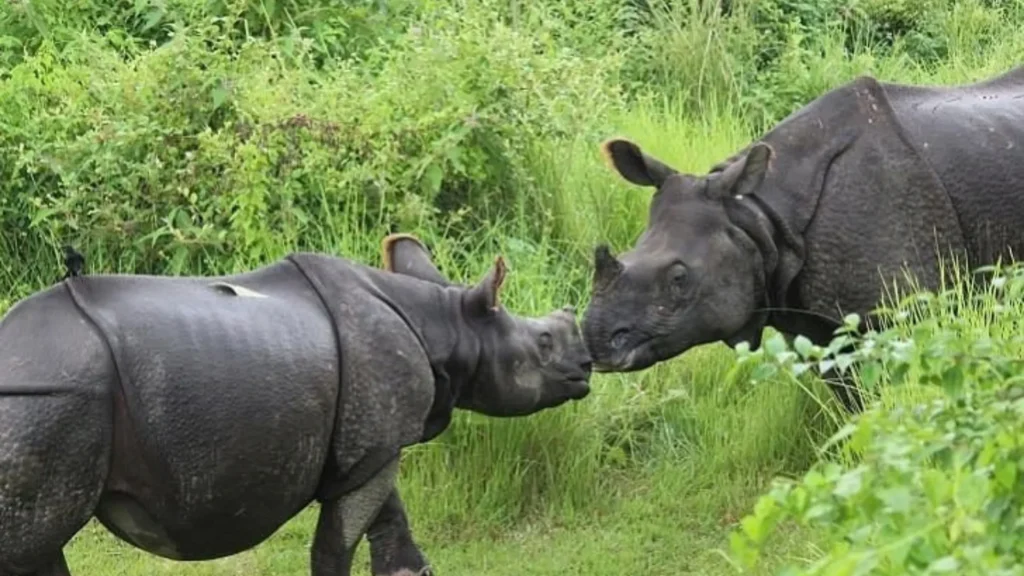
According to Nepal’s Rhino Conservation Action Plan 2024–2034, the 2021 national rhino census recorded 752 greater one-horned rhinos in Nepal. Of these, 694 were recorded in the Chitwan National Park landscape, including the buffer zone and adjoining forests. The distribution was:
| Protected area/landscape | Rhino population, 2021 |
| Chitwan National Park, buffer zone & adjoining forests | 694 |
| Bardia National Park | 38 |
| Shuklaphanta National Park | 17 |
| Parsa National Park | 3 |
| Total Nepal | 752 |
Chitwan’s 694 rhinos represented approximately 92% of Nepal’s recorded rhino population in 2021, highlighting the park’s central role in national rhino conservation. The population has increased since the 2015 national count, when Nepal recorded 645 rhinos, including 605 in the Chitwan National Park landscape. Continued monitoring is important because population totals can change through births, deaths, natural movement, translocation, and changes in survey coverage.
History of One-Horned Rhinos in Sauraha, Chitwan
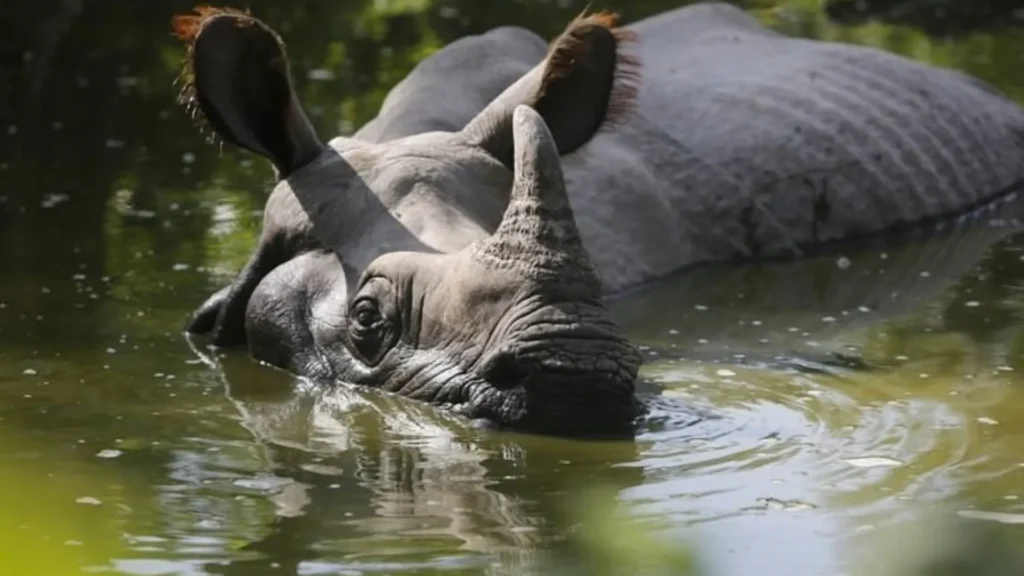
The history of one-horned rhinos in Chitwan reflects a major decline followed by decades of conservation and population recovery. In the early 1950s, Chitwan supported a large rhino population, but hunting, poaching, habitat conversion, forest clearance, and increasing human pressure caused a severe decline. By the late 1960s, fewer than 100 rhinos remained in the Chitwan area. The establishment of Chitwan National Park in 1973 and stronger protection helped the population recover. By 2021, 694 rhinos were recorded in the Chitwan National Park landscape, including its buffer zone and adjoining forests.
| Year | Historical event/rhino population |
| Early 1950s | Chitwan had a large rhino population, but settlement, forest clearance, agricultural expansion, and hunting increased pressure on rhino habitat. |
| 1950s | Malaria eradication, migration from the hills, farming expansion, and forest conversion significantly changed the Chitwan Valley landscape. |
| Early 1960s | Parts of the Chitwan Valley were declared a rhino sanctuary, while Gaida Gasti (Rhino Patrol) was established to strengthen rhino protection. |
| Late 1960s | Fewer than 100 rhinos remained in the Chitwan area following years of hunting, poaching, and habitat loss. |
| 1973 | Chitwan National Park was established with an initial area of 544 km². |
| 1975 | The first park management plan was prepared, and the Nepal Army was deployed for park protection. |
| 2000 | 544 rhinos were recorded through the sweep method. |
| 2005 | Chitwan’s rhino population declined to 372. |
| 2011 | Chitwan recorded 503 rhinos. |
| 2015 | 605 rhinos were recorded in the Chitwan National Park landscape. |
| 2021 | 694 rhinos were recorded in the Chitwan National Park landscape, including its buffer zone and adjoining forests. |
Why Chitwan Is One of the Best Places for Rhino Sightings
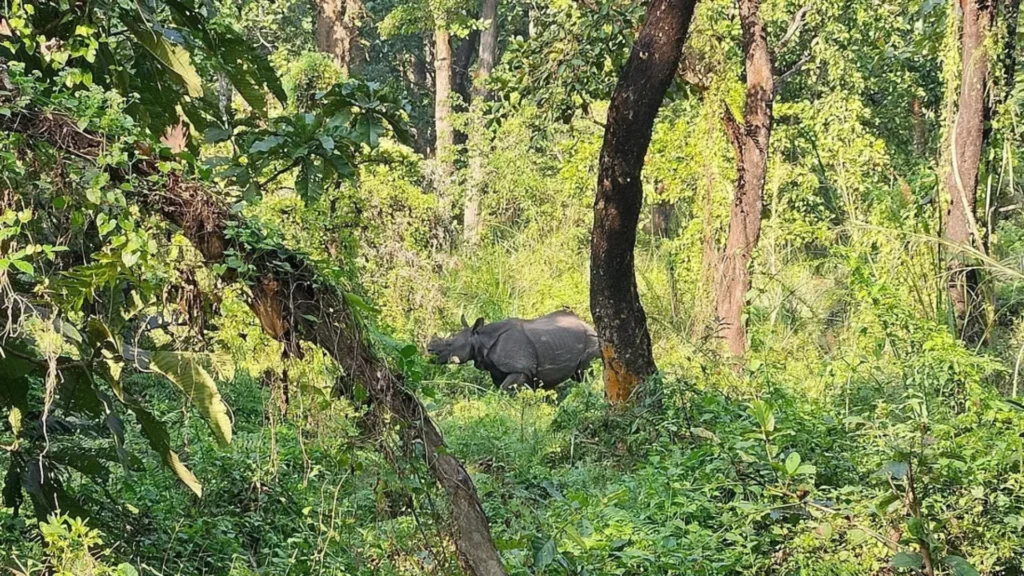
The greater one-horned rhinoceros has its main wild populations in India and Nepal. In Nepal, most greater one-horned rhinos live in Chitwan National Park, where grasslands, wetlands, riverine forests, and floodplains provide suitable habitat. Established in 1973 as Nepal’s first national park, Chitwan also has a long history of rhino protection and conservation.
- Strong rhino habitat: Grasslands, wetlands, rivers, and forests provide food, water, shelter, and wallowing areas for rhinos.
- Major conservation success: Long-term habitat protection, management, and anti-poaching efforts have helped Nepal’s rhino population recover from historic declines.
- Protected wildlife landscape: Chitwan National Park protects important rhino habitat and has been a UNESCO World Heritage Site since 1984.
- Year-round habitat: Rhinos live in Chitwan throughout the year, although their movements change with food availability, water levels, weather, and habitat conditions.
- Several safari options: Visitors can look for rhinos by jeep safari, guided jungle walk, and canoe ride, allowing them to explore different parts of the park and its surrounding habitats.
- Conservation remains important: The greater one-horned rhinoceros is classified as Vulnerable, so continued habitat protection, anti-poaching work, and responsible wildlife tourism remain essential for its long-term survival.
Best Time to See One-Horned Rhinos in Chitwan
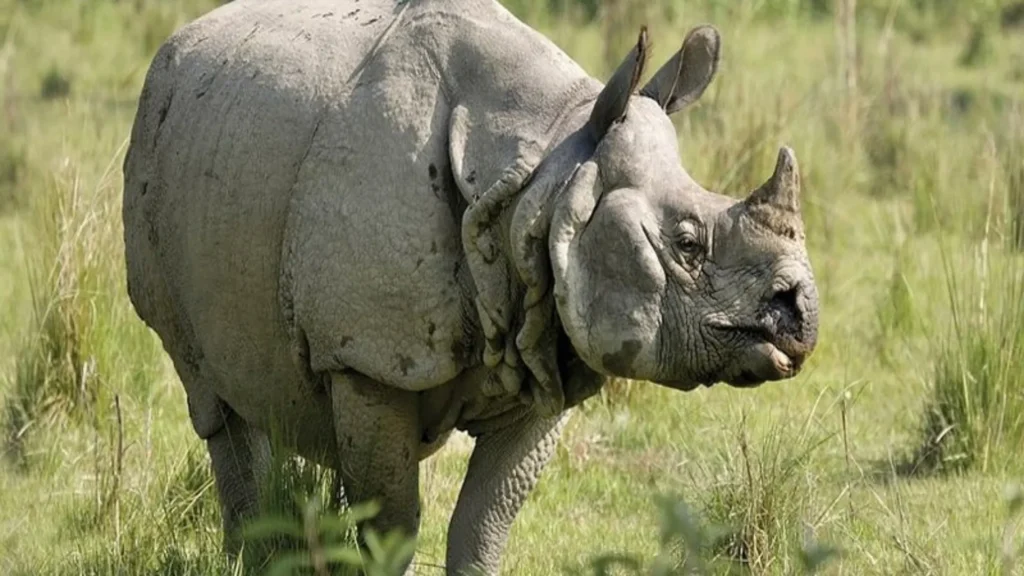
October to March is generally the best time to see one-horned rhinos in Chitwan National Park. The Nepal Tourism Board identifies October–March as the best season, with an average temperature of around 25°C. April to June is the hottest period, with temperatures reaching up to 43°C, while July to September is the rainy monsoon season. Rhinos can be seen throughout the year, but rainfall, vegetation, water levels, temperature, and animal movement can affect visibility and safari conditions.
| Month | Weather | Temperature / Conditions |
| January | Cool and mostly dry | Cool winter conditions; generally comfortable for safaris |
| February | Cool to mild and dry | Pleasant winter conditions; good for safari activities |
| March | Warm and mostly dry | Temperatures begin rising as the hot season approaches. |
| April | Hot and dry | Very warm; temperatures can rise sharply. |
| May | Very hot and increasingly humid | Hot conditions; temperatures can approach 43°C. |
| June | Hot and humid | Very warm; a monsoon approaches toward the end of the month. |
| July | Rainy and humid | Monsoon season; frequent rainfall and wet conditions |
| August | Rainy and humid | Frequent rainfall and greener, denser vegetation |
| September | Rainy and humid | The monsoon continues, gradually becoming drier toward the end |
| October | Pleasant and mostly dry | Post-monsoon weather: one of the best months for a safari |
| November | Pleasant and dry | Comfortable conditions and generally good visibility |
| December | Cool and dry | Cooler winter conditions; generally comfortable for wildlife activities |
Best Safari Activities for Spotting Rhinos in Chitwan
In Chitwan National Park, there are several ways to explore wildlife and natural habitats. We offer different activities in Chitwan National Park where you can comfortably see rhinos. A jeep safari and guided jungle walk are excellent options for searching for rhinos on land, while a canoe ride lets you see the rivers and wetlands from the water.
1. Jeep Safari
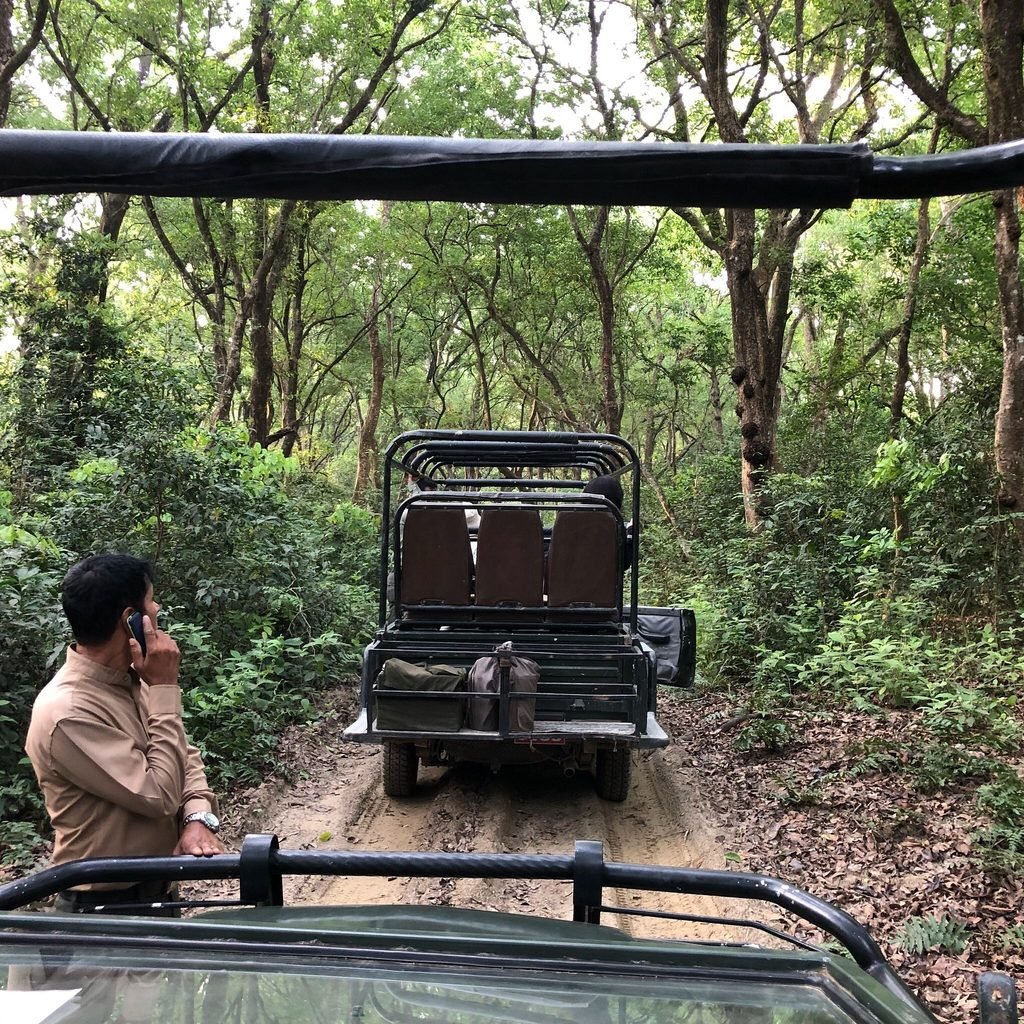
Our Jeep safari lets you cover more ground while exploring Chitwan’s forests, grasslands, wetlands, and river areas. Your guide can look for rhino tracks, dung, feeding marks, wallows, and other signs of recent activity. During the safari, you may also see deer, wild boar, crocodiles, and many bird species. You should never ask the driver to chase or approach a wild animal for a closer view.
2. Guided Jungle Walk
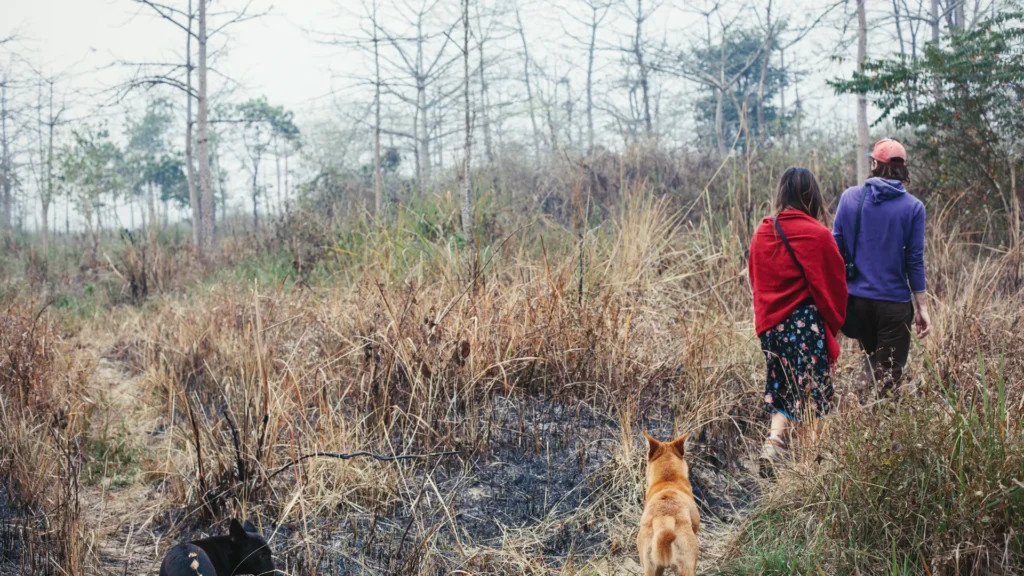
The guided jungle walk lets you see Chitwan from a different perspective. On foot, you can take your time and notice signs of animals along the trail, such as footprints, dung, feeding marks, and broken branches. During the walk, we can take you through forest, grassland, riverbanks, and wetland areas. Our guide will help you understand what you see and keep you safe during the walk. If you spot a rhino while walking, stay calm and keep a safe distance. Do not walk toward it; rhinos may feel their way is blocked, chase you, or make sudden movements. Just follow your guide’s recommendations to get the best insight into the walk.
Where Can You Spot One-Horned Rhinos in Chitwan National Park?
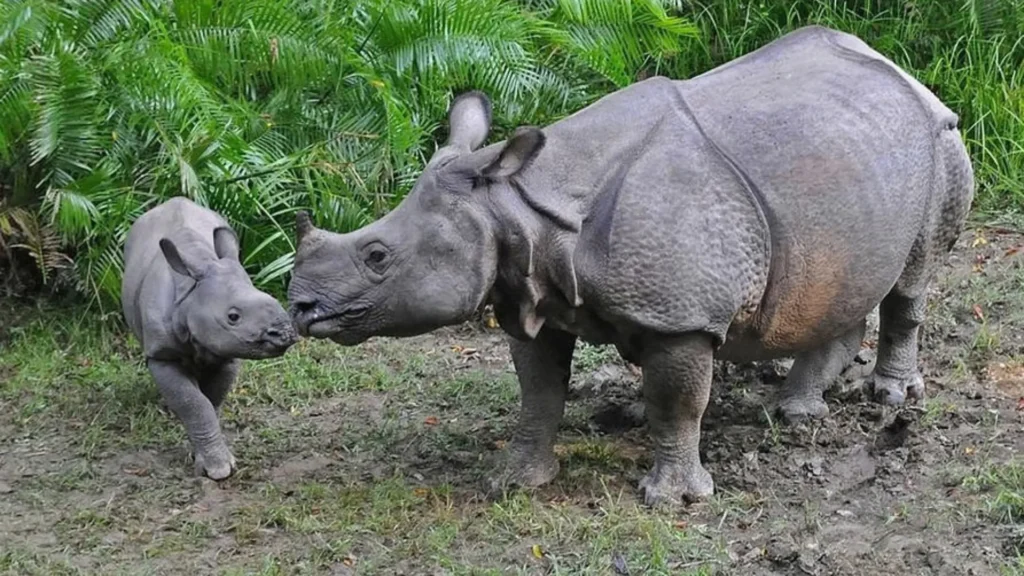
Greater one-horned rhinos move freely through Chitwan’s grasslands, wetlands, riverine forests, and floodplains. Wildlife movement changes with food availability, water, temperature, and season, so no specific location guarantees a sighting. However, certain habitats provide suitable conditions for rhino activity.
1. Grasslands Near Sauraha
Sauraha is one of the main tourism gateways to Chitwan National Park and provides access to safari routes through nearby grasslands and forest areas. Rhinos frequently come onto open grasslands for grazing, making these habitats important areas for wildlife viewing. Our Safari guides track recent animal activity and select routes based on current conditions.
2. Riverbanks and Wetlands
Riverbanks, floodplains, and wetlands provide important feeding and cooling areas for greater one-horned rhinos. The Rapti and Narayani river systems contain habitats where rhinos can graze, drink, bathe, and wallow. During hotter periods, water and shaded areas can become particularly important for rhino activity.
3. Floodplain and Riverine Forest Areas
Chitwan’s floodplain grasslands and riverine forests form core habitats for the species. Rhinos move between open grasslands, forest edges, and water sources according to food availability and environmental conditions. These habitat transitions can provide good opportunities for sightings during guided safaris.
4. Buffer Zone and Adjoining Forests
Rhinos also occur in areas beyond the park’s core boundary, including parts of the buffer zone and adjoining forests. Our local guides can use recent tracks, dung, feeding signs, and habitat conditions to locate active rhino areas while maintaining an appropriate distance from wildlife.
In these four places, there is a very high chance of spotting rhinos in Chitwan.
Responsible Rhino Viewing Practice
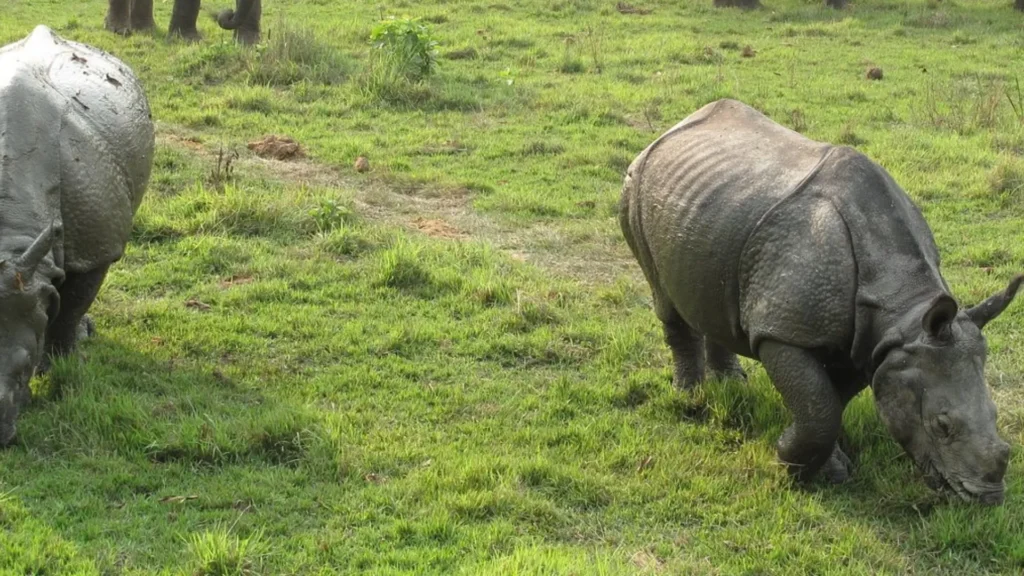
Seeing a greater one-horned rhino in Chitwan National Park can be memorable, but visitors must respect its space and natural behavior. Follow these responsible wildlife practices during every safari. Here are the key points to remember during your safari.
- Maintain a safe distance: Keep a respectful distance from rhinos and never approach, touch, or attempt to photograph them from close range.
- Never feed a rhino: Feeding wildlife can alter natural feeding patterns and encourage animals to associate people with food.
- Follow your guide’s instructions: Listen carefully and follow their instructions about distance, vehicle movement, walking routes, and wildlife encounters.
- Stay quiet near rhinos: Avoid shouting, loud conversations, music, or sudden noises that can disturb or alarm the animal
- Never block its path: Keep vehicles and walking groups out of the rhino’s route and allow the animal to move freely through its habitat.
- Do not chase wildlife: Never ask a safari vehicle or guide to follow a rhino closely for a better photograph or prolonged viewing.
- Avoid sudden movements: Remain calm and move slowly when a rhino approaches or changes direction near the safari route.
- Do not use flash photography: Avoid flash when photographing rhinos, and use a zoom lens to capture images without moving closer.
One-Horned Rhino Conservation in Nepal
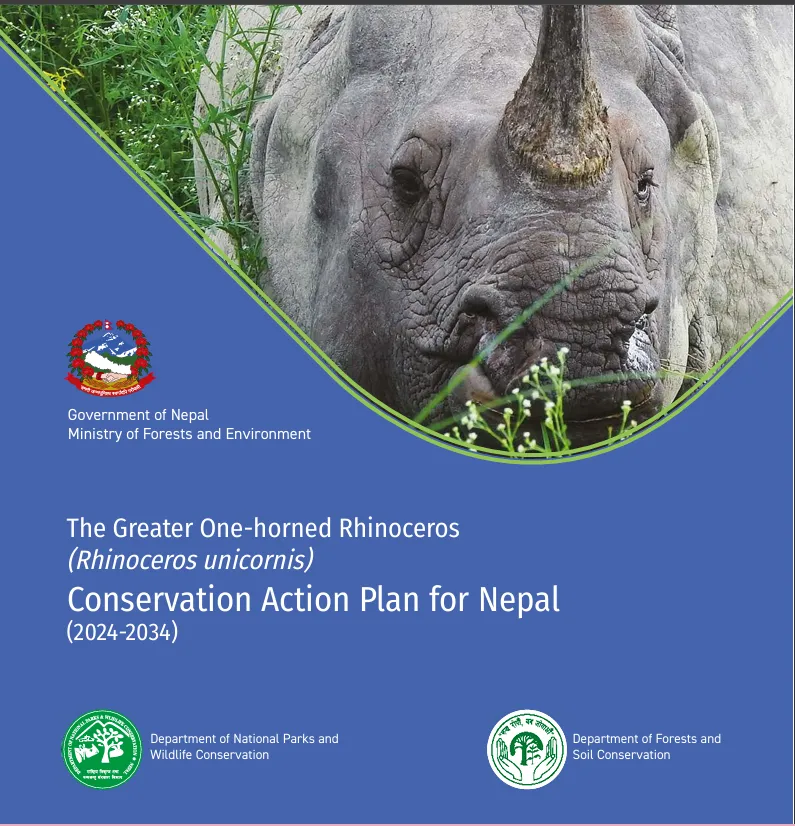
Nepal has developed long-term protection, monitoring, habitat management, and anti-poaching measures to conserve the greater one-horned rhino. Chitwan National Park contains Nepal’s largest recorded rhino population, while conservation programs have also established populations in Bardia and Shuklaphanta. The Rhino Conservation Action Plan 2024–2034 aims to maintain viable rhino populations in Chitwan, Bardia, and Shuklaphanta through a socio-ecological and One Health approach.
- 752 rhinos in Nepal: The 2021 National Rhino Count recorded 752 greater one-horned rhinos in Nepal. The count recorded 694 in Chitwan National Park, its buffer zone, and adjoining forests, 38 in Bardia, 17 in Shuklaphanta, and 3 in Parsa.
- Population growth: Nepal’s rhino population increased from 645 in 2015 to 752 in 2021, an increase of 107 rhinos. Chitwan increased from 605 to 694 during the same period.
- Anti-poaching operations: Nepal uses coordinated wildlife protection involving park authorities, the Nepal Army, the Nepal Police, community-based anti-poaching groups, and other agencies. The current conservation action plan also includes SMART patrolling, CCTV surveillance, and other technologies to strengthen wildlife-crime control.
- Habitat management: Conservation programs manage grasslands and wetlands, monitor rhino populations, improve wildlife health services, and address habitat degradation.
- Conservation beyond Chitwan: Nepal has translocated rhinos from Chitwan to Bardia and Shuklaphanta to establish additional viable populations and reduce dependence on a single population.
Conservation Importance
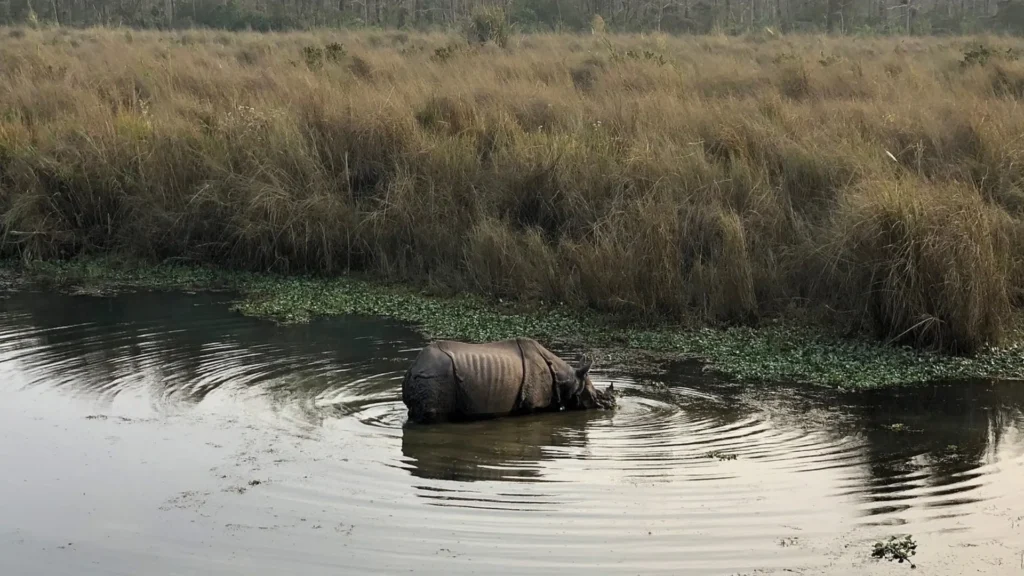
Greater one-horned rhinos are still at risk from habitat loss, poaching, conflicts between people and wildlife, invasive plants, flooding, and changes in grassland ecosystems. Nepal’s conservation approach therefore goes beyond protecting individual animals. It also focuses on maintaining suitable habitat, monitoring populations, strengthening anti-poaching operations, supporting wildlife health, and working with communities living around protected areas.
Rhinos have been translocated from Chitwan to Bardia and Shuklaphanta to develop additional populations outside the country’s main rhino area. This approach reduces reliance on a single population and supports long-term conservation across Nepal’s Terai.
Few Tips for a Successful Rhino Safari in Chitwan
A little preparation can make your Chitwan wildlife safari more comfortable and help you observe rhinos responsibly. Rhinos are wild animals, so good safari practice means staying patient, following your guide, and avoiding actions that could disturb wildlife. These are some of the tips from our side.
Before Safari
- Choose an experienced safari operator: Jungle safaris are not everyone’s cup of tea, so when booking, choose an experienced or well-known safari operator. We are one of the pioneers in Chitwan wildlife safaris. With us, hundreds of safari lovers have explored Chitwan National Park. Look at what one of our guests has to say about our jungle safari tour
You can see the valuable words of our clients and what they have to say about us:

You can see our rating and all the reviews.
- Carry Binoculars: These binoculars allow you to observe rhinos and other wildlife from a safe distance with the best view without trying to move closer.
- Wear Suitable Clothing: Choose comfortable, lightweight clothing suitable for outdoor conditions. Closed shoes, a hat, sunglasses, sunscreen, and insect repellent can also make the safari more comfortable.
During Safari
- Stay Quiet: Keep voices low and avoid sudden movements when wildlife is nearby. Quiet observation gives animals more space and reduces disturbance.
- Follow Park Rules: Listen to your guide and obey the park rules throughout the safari. Do not feed animals, leave the designated route without permission, or throw anything into the park.
- Respect Wildlife Distance: Never approach, chase, block, or attempt to attract a rhino. Allow animals to move freely and follow your guide’s instructions if a rhino comes close to the vehicle or trail.
Photography Tips
- Use Zoom Lenses: A telephoto or zoom lens lets you photograph rhinos from a safe distance without approaching them.
- Avoid Disturbing Animals: Do not use photography to justify getting closer, making loud noises, using flash, or blocking an animal’s path. Put wildlife welfare before getting the perfect photograph.
Frequently Asked Questions By Safari Lovers
1. Where can I see one-horned rhinos in Chitwan?
Rhinos use grasslands, wetlands, riverbanks, floodplains, forest edges, and other suitable habitats throughout the Chitwan landscape. Areas around Sauraha provide access to safari routes, but rhinos move freely, and sightings are never guaranteed.
2. What is the best time of year for seeing rhinos in Chitwan?
No single month guarantees rhino sightings. Visibility often depends on grass height, rainfall, temperature, water levels, and animal movement. Cooler periods and areas with open vegetation can make wildlife observation easier.
3. Are greater one-horned rhinos dangerous?
Yes. They are large, powerful wild animals and can react strongly when they feel threatened. Maintain a safe distance and follow your guide’s instructions.
4. Are rhino sightings guaranteed in Chitwan?
No. Rhinos move freely through the park, and their location changes according to food, water, temperature, habitat conditions, and individual behavior.
5. What should I bring for a rhino safari?
Useful items include binoculars, a camera with a zoom lens, a hat, drinking water, comfortable clothing, sunscreen, and insect repellent. Choose practical clothing suitable for outdoor conditions.
6. Can I take photographs of rhinos?
Yes, you can photograph rhinos during safari activities, but keep your distance and avoid disturbing the animal. A zoom lens allows you to take photographs without moving closer.
7. Are greater one-horned rhinos solitary?
Generally, yes. Adults usually live alone, although rhinos can temporarily gather around feeding grounds, water, or wallows.
8. Where do Indian rhinos live?
Greater one-horned rhinos naturally occur in India and Nepal. They use grasslands, wetlands, riverine areas, shrublands, and other suitable lowland habitats.
9. Can one-horned rhinos swim?
Yes. Greater one-horned rhinos are strong swimmers and can enter rivers, ponds, and other water bodies. They also use water and mud to cool themselves.
10. Do one-horned rhinos have horns?
Yes. Rhinoceros unicornis has one horn. The horn consists primarily of keratin.
11. How many one-horned rhinos live in Nepal?
The 2021 National Rhino Count recorded 752 greater one-horned rhinos in Nepal. The count recorded 694 in Chitwan, its buffer zone, and adjoining forests, 38 in Bardia, 17 in Shuklaphanta, and 3 in Parsa.
12. Why do rhinos roll in mud?
Rhinos wallow in mud to help cool their bodies, protect their skin from the sun, reduce insect irritation, and maintain skin condition.
Conclusion
The greater one-horned rhino is a defining species of Chitwan National Park. The park gives visitors a chance to experience the one-horned rhino with their own eyes. Its grasslands, wetlands, riverbanks, and forests support one of Nepal’s largest rhino populations. Decades of conservation work have also helped protect this iconic species.
As a leading operator of Chitwan jungle safaris, we offer jungle safari packages tailored to your interests and travel plans. During your safari in Chitwan, you may see deer, crocodiles, wild boar, birds, and, with luck, the Bengal tiger. Choose from jeep safaris, guided jungle walks, and canoe rides. Each activity offers a different way to explore Chitwan.
Ready to explore Chitwan National Park? Contact our team to plan your Chitwan safari. We arrange customized itineraries, experienced local guides, private transportation, and wildlife activities based on your interests and travel schedule.