
Introduction: The Soul of the Terai
Chitwan is not only a place where you can witness the wildest animals but also a source of the Tharu community’s beautiful tale, which is the story of the introduction of one of the oldest ethnic groups in Nepal. The Tharu community in Chitwan has lived on the fertile Terai plains for centuries, developing a culture that is deeply connected to nature, traditions, and communal life.
The Tharu culture in Chitwan offers a more immersive experience compared to typical sightseeing. It allows the travelers to take in the rare view of the daily life, customs, and rituals of the Tharu people. Their rich heritage is revealed in every aspect, from early traditional mud-and-thatch homes to colorful wall paintings and from delicious food to music and dance.
Not only is wildlife seen, but the very spirit of Chitwan through the people’s warmth, creativity, and endurance is experienced by the visitors, making it a journey that is cultural and unforgettable at the same time.
Who Are the Tharu People?
The Tharu culture in Chitwan is one of Nepal’s oldest and largest indigenous ethnic groups, living for centuries in the Terai lowlands. One of the oldest native communities in Nepal, the Tharu have long resided in the Terai lowlands.
They developed a unique resilience to the area’s endemic malaria, allowing them to thrive in the dense jungles that other groups avoided. Their deep connection to the forest has earned them the name “Children of the Forest.” Their lifestyle reveals a close relationship with the soil and fauna, which further links them to the legend of Chitwan.
Tharu Villages: Living Museums of Tradition
Tharu villages are considered “living museums” because they offer a firsthand glimpse into the traditional lifestyle, culture, and customs of the Tharu culture of Chitwan, a historically self-sufficient indigenous group in Nepal’s Terai region.
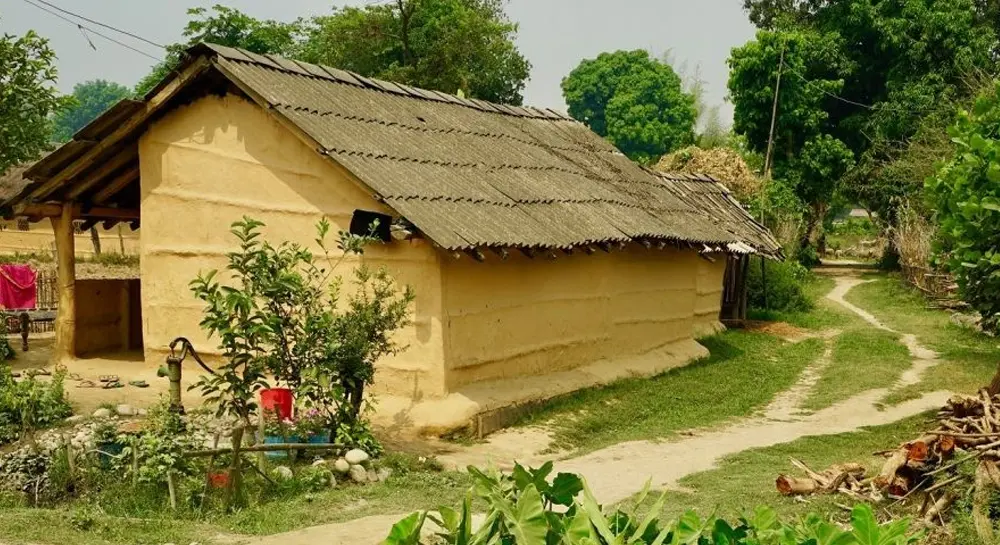
The narrow paths are bordered by houses made of mud and thatch, all having hand-painted designs, and the villagers are seen performing their daily work with a certain tranquil manner.
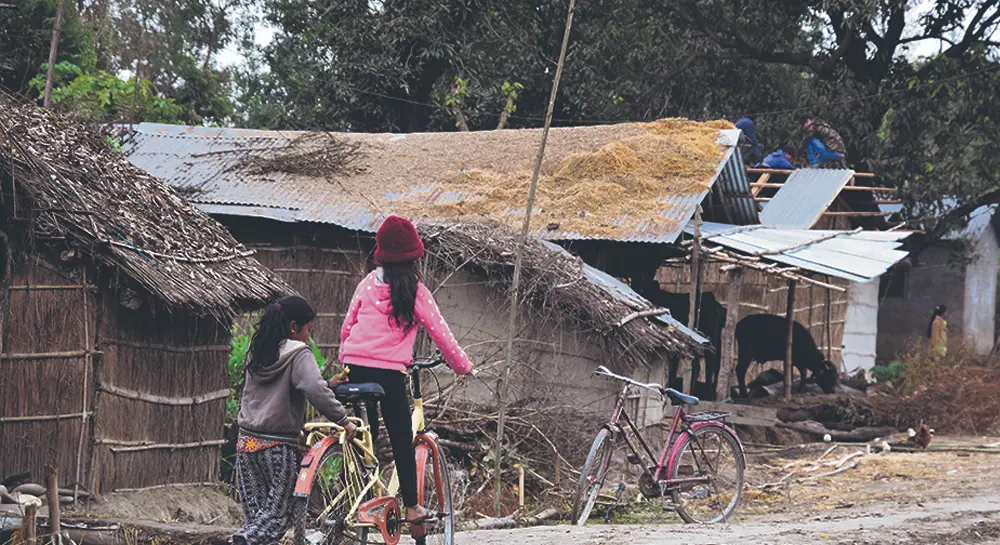
The construction of every house is done using natural elements such as clay, cow dung, and rice husks, making the inside cool even in hot weather. Over centuries, the villagers have honed their skills in agriculture, fishing, and weaving.
The daily life of the people in the village reveals how sustainability is mixed with artistry and how the whole village symbolizes the Tharu’s strong tie with the land they live on.
Tharu Art, Craft & Architecture
Tharu craftsmanship is an artistic expression of their culture in Chitwan, which is very alive and colorful. The houses they live in are not only shelters but also art galleries, their walls adorned with geometric patterns, animal symbols, and images of fertility and prosperity. Their work varies by community and the specific type of art.
The locals skillfully make traditional tools, baskets, and pottery all by using clay and other local materials. The homes are designed to suit the environment and stay strong during the monsoon rains, keeping a simple yet elegant style. These artistic forms of expression are the living proofs of a community that sees beauty in ordinary life.
The Rhythm of the Tharu: Music & Dance
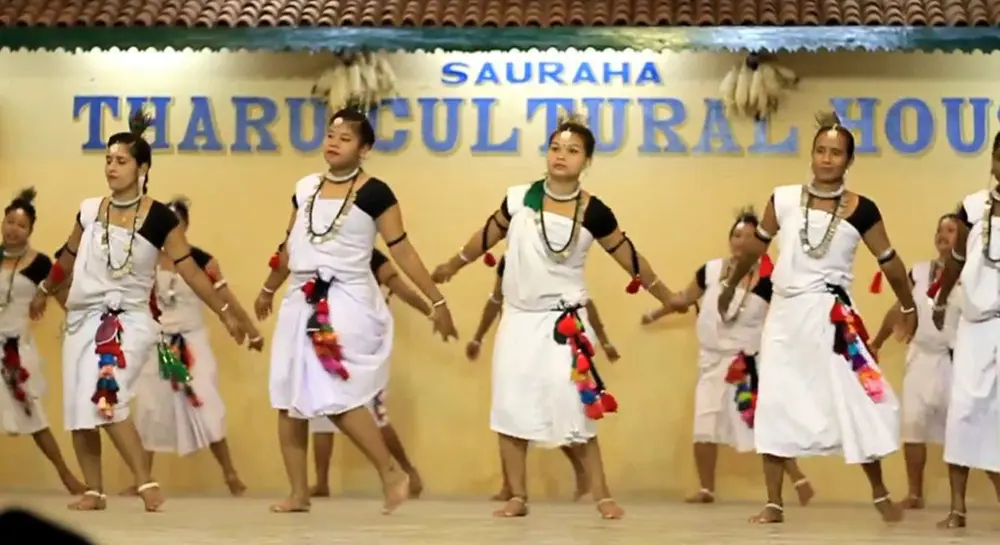
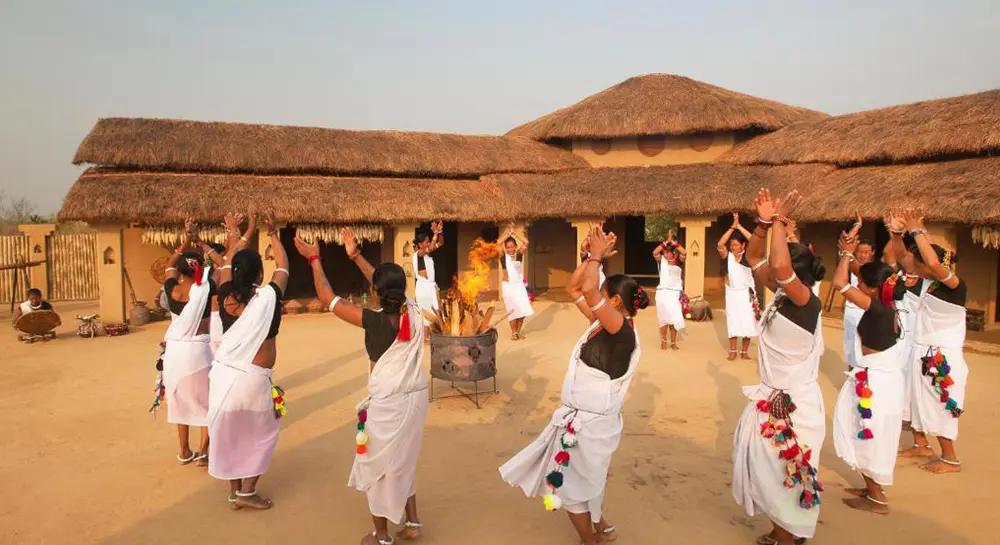
The life of the Tharu people revolves around music and dance, their main ways of expressing joy and telling stories. The lively sounds of drums and sticks used in the famous Lathi Nach (stick dance) often fill the evenings in Tharu villages. Another popular performance is the Mayur Dance, which imitates peacocks and symbolizes the beauty and happiness of nature.
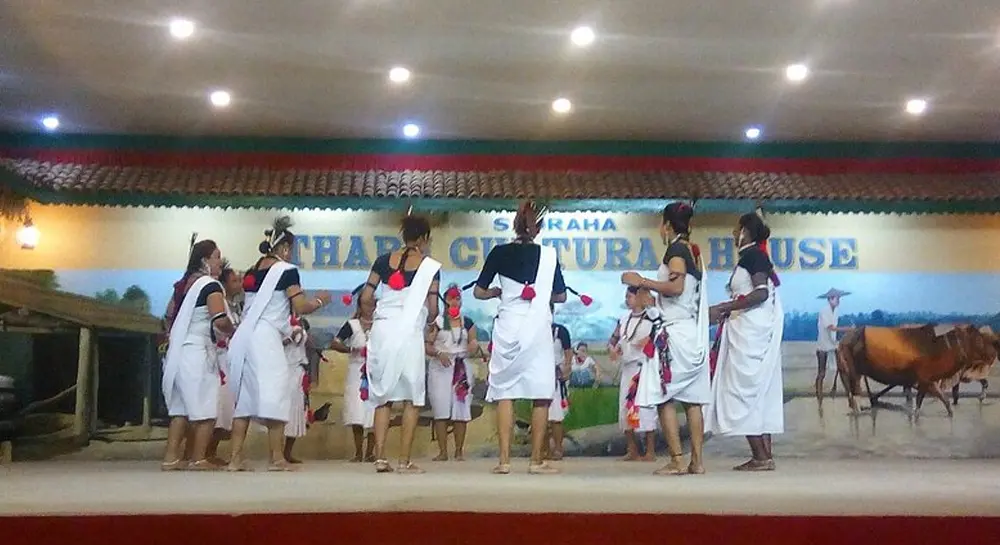
Each dance narrates a different story, ranging from romance to tales of heroism. In Sauraha or nearby villages, tourists can see cultural performances where the locals wear traditional clothes and invite visitors to join in the fun. This is a wonderful way to experience Tharu culture in Chitwan.
Tharu Cuisine: A Taste of the Terai
Tharu cuisine is a delicious reflection of Tharu culture in Chitwan, rooted in the fertile Terai plains and local resources. Fresh river fish, forest herbs, and seasonal vegetables form the basis of traditional dishes, highlighting the sustainability of Tharu culture in Chitwan. Popular foods like dhikri, bagiya, and ghonghi (snail curry) showcase the authentic flavors of Tharu culture in Chitwan.
Meals often include lentils, rice, and seasonal greens, emphasizing the strong connection between food and land in Chitwan. Dining with a Tharu family is a culinary journey, providing a taste of tradition and heritage that is both wholesome and unforgettable.
Festivals and Traditions
Festivals are the core of Tharu society, characterized by the spirit of dance, colors, and togetherness. Maghi, the Tharu New Year, also historically signified emancipation from the bonded labor system known as kamaiya. The other significant festivals are Jitiya, which honors maternalism, and Ashtimki, known for its symbolic wall art.
Each of these festivals mirrors the nature- and community-loving spirit. Traditional music, local food, and practices always unite the Tharu people. Tourists lucky enough to be around during these special celebrations will be amazed by the Tharu’s rich cultural life, which is very much alive in modern Nepal, a fact well confirmed by an old hand in the tourism sector.
Responsible Cultural Tourism
Responsible cultural tourism with Nepal’s Tharu community focuses on etiquette, sustainability, and important events. Guests do not simply watch but get involved in local life and acquire knowledge about Tharu customs, art, and the daily lives of the people.
Both visitors and the Tharu community benefit from this impact, as locals can earn a living by assisting travelers who wish to experience their culture. By being part of the homestays, cultural activities, and village life, visitors not only change the Tharu lifestyle for the better but also have a real, unforgettable experience in the Terai flatlands.
How to Experience the Tharu Village Tour
The Tharu Village tour is something you must not miss if you are staying in Sauraha, Bachhauli, or Meghauli close to the Chitwan National Park. The tourists can take an ox-cart ride over the fields, visit the typical houses, or take part in activities such as cooking minding, etc.
Evening cultural shows are like parties where they do their thing under the open sky among tourists and visitors. Visitors can do both the village tour and the Chitwan jungle safari to enjoy a full experience of nature and culture. Staying for either half a day or two will give them a better experience.
On top of this, expert Tharu guides take small groups of tourists around and explain to them the local customs, flora, and fauna. The entire community benefits from the income made through these excursions.
Where to Stay: Cultural Comforts
Chitwan has a range of accommodations and aims to provide an inimitable experience that involves Tharu culture along with a lot of comfort. Lodges that are environmentally friendly and only accessible on foot prove to be beautiful examples of balancing modern facilities with traditional design, mud-plastered walls, bamboo decor, and thatched roofs.
Nothing beats the charm of a village homestay because here guests are part of an intimate cultural exchange sharing meals and stories with local families. Living amidst rice fields and forest landscapes, encircled by Tharu-style dwellings, is an unforgettable experience.
It is not just a place to stay; it is an opportunity to immerse oneself in a culture characterized by warmth, humility, and genuineness.
Why Tharu Culture Matters
Even more than a legacy, Tharu culture is a lesson in the ongoing concord of man and nature. Their three main sources of food and the wilderness they so honor, together with the community so powerfully bonded, reflect values that the world today could well emulate.
As world development and modernization grow, the upholding of this culture becomes ever more important. The Tharu narrative of Chitwan is an integral part of Nepalese culture, emphasizing that true wealth is derived from the sustainable customs of both people and the environment.
Practical Travel Tips
- Best time to visit: October–March for pleasant weather and festivals, highlighting Tharu culture in Chitwan.
- Accessibility: 5–6 hours by road or a 25-minute flight from Kathmandu, facilitating visits to Tharu culture in Chitwan.
- Dress modestly and ask permission before photographing locals to respect Tharu culture in Chitwan.
- Small gifts like stationery are appreciated; avoid cash to honor Tharu culture in Chitwan.
- Use local guides to learn and support Tharu culture in Chitwan.
- Politeness and respect help travelers experience Tharu culture in Chitwan fully and meaningfully.
Conclusion: The Heartbeat of Chitwan
The Tharu Culture & Village Tour reveals that the genuine essence of Chitwan lies within its people. The Tharu people embody not only the past but also the present and future, as their customs and practices reflect the vibrancy of Chitwan’s Tharu culture.
Music, dance, crafts, and food are all mirrors of the Tharu culture in Chitwan, and all of them together contributed to an unforgettable experience for the visitors. By visiting the Tharu, tourists are not merely observers, but they become part of the living heritage, which in turn makes the Tharu culture in Chitwan more than just seeing; it’s doing.
The Tharu culture in Chitwan is heard through every smile, song, and festival, which clearly shows that the people of the region with their kindness and the long-standing legacy of Tharu culture in Chitwan are the ones that bestowed the real magic of the region.
If you wann book your Holiday at Chitwan Click me or you can book via this website too – Himalayan Luxury Holiday